
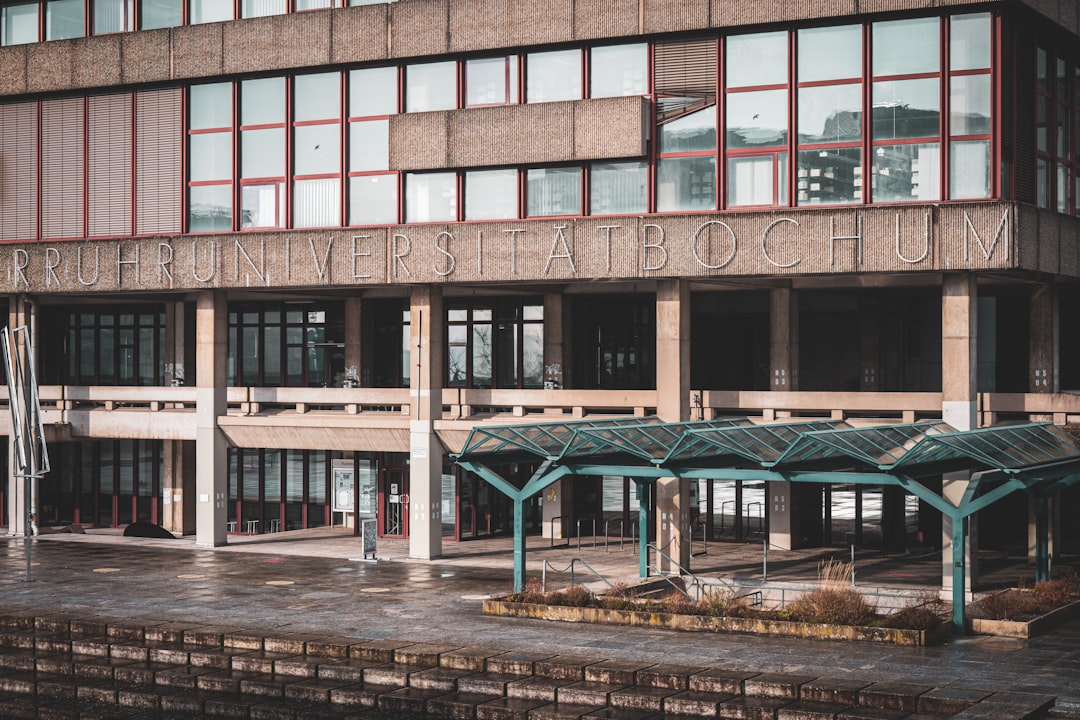
Germany is rising as a study destination by combining academic freedom, affordability, and post-study work options, while MBA programmes increasingly use managed pressure to build leadership. #studyingermany #mba #internationalstudents #highereducation #careerdevelopment #academicfreedom
International students are rethinking what makes a country worth choosing. Cost still matters. Rankings still matter. Career outcomes definitely matter. But in a more uncertain global environment, students are also paying closer attention to something less tangible and often more decisive: values.
That shift helps explain why Germany is gaining ground so quickly in global higher education. It is no longer seen only as a strong engineering and manufacturing nation with affordable tuition. For many prospective students, especially those comparing options across the US, UK, Canada, and Australia, Germany increasingly represents something broader: stability, academic freedom, employability, and long-term opportunity.
At the same time, business education is undergoing its own reset. MBA programmes are moving beyond traditional case studies and lecture halls, introducing real client pressure, simulations, and emotionally demanding team experiences to prepare students for modern leadership. These two developments may look separate, but they point to the same reality: students want education that is both principled and practical.
Here is why Germany’s position is strengthening, what makes its value proposition distinctive, and why changing MBA teaching models matter in the same conversation.
Germany’s appeal now goes beyond affordable education
Germany has spent years building a reputation for high-quality higher education, especially in STEM, research, and professionally oriented master’s degrees. That foundation remains important, but it no longer tells the whole story.
What stands out today is how clearly Germany can present itself as a welcoming destination for international talent at a moment when other major study markets are becoming more restrictive, unpredictable, or politically noisy. For students planning a multi-year international move, that clarity matters.
According to data highlighted by organizations such as DAAD and the official Study in Germany platform, Germany now ranks among the world’s leading destinations for international students, PhD candidates, and researchers. It has also gained exceptional traction among postgraduate students, particularly those looking for English-taught master’s programmes.
That growth is not happening by accident. Germany offers a combination that many students struggle to find elsewhere:
- strong public universities and respected business schools
- relatively low tuition costs compared with other major destinations
- an 18-month post-study work pathway for graduates
- deep industry links in engineering, automotive, healthcare, sustainability, finance, and technology
- a reputation for safety, reliability, and academic seriousness
For students comparing total return on investment, that package is persuasive. A degree is not just a classroom experience anymore. It is a migration decision, a career decision, and often a values decision all at once.
Why values are becoming part of Germany’s academic brand
One of the most interesting developments in Germany’s international education strategy is the way institutions are talking about themselves. The message is not limited to rankings, facilities, or salary outcomes. Increasingly, universities and business schools are framing Germany as a place defined by openness, research quality, democratic stability, and protected academic freedom.
That matters because international students are navigating a world shaped by visa uncertainty, geopolitical tension, debates about freedom of expression, and growing concern over whether universities can remain open spaces for inquiry. In that environment, a country that can clearly articulate its commitments has a meaningful advantage.
Germany’s appeal, then, is not just functional. It is symbolic too. It signals that students and researchers can build their futures in a system that values knowledge creation, institutional credibility, and social stability.
For prospective MBAs and postgraduate learners, this is especially powerful. Many business students are not only looking for a degree. They are looking for a place where they can build networks, work after graduation, and imagine a life beyond campus. A country that communicates trust, safety, and predictability becomes easier to choose.
This is one reason Germany has become more attractive even among students who might once have defaulted to the traditional English-speaking destinations. When uncertainty increases elsewhere, a country with a consistent message becomes more visible.
Germany is becoming a serious postgraduate powerhouse
Germany’s strongest momentum is arguably at the postgraduate level. The country has expanded its portfolio of English-taught master’s degrees significantly in recent years, making it far more accessible to international applicants who want world-class study options without needing full German proficiency on day one.
That does not mean language no longer matters. In fact, students who learn German often improve their internship, work, and integration prospects considerably. But the growth in English-taught programmes lowers the entry barrier and opens the door to a wider global applicant pool.
For many international learners, Germany now offers an attractive sequence:
- enter through an English-taught master’s or MBA
- gain exposure to a strong research or applied learning environment
- use the post-study work period to secure employment
- build longer-term career options inside Europe’s largest economy
This logic is particularly compelling in fields where Germany already has global credibility, including artificial intelligence, advanced manufacturing, automation, data science, renewable energy, logistics, and applied management.
Students planning careers in these areas often benefit from building experience alongside study. Those looking to strengthen practical skills can also explore structured opportunities such as AI & Machine Learning internships, Data Analytics & Data Science internships, or browse all internship options to better connect academic learning with employable experience.
That blend of study and career preparation is one reason Germany’s position feels durable rather than temporary.
Why international students from the US are watching Germany more closely
Another emerging sign of Germany’s momentum is rising interest from students, researchers, and faculty based in the United States. This does not mean the US has lost its academic importance. It remains one of the most influential higher education systems in the world. But increased interest in Germany suggests that some internationally mobile learners are actively seeking alternatives.
Several factors are likely shaping this shift. Students and academics are increasingly sensitive to questions around academic independence, research funding, immigration policy, and the broader social climate around university life. In that context, Germany appears to many as a stable and credible option with a strong public commitment to scholarship.
There is also a practical side. For students who want access to Europe, cross-border mobility, and a lower cost profile than the US, Germany feels strategically smart. It offers access not only to German employers but to the wider European job market and research ecosystem.
This matters for master’s students, doctoral researchers, and faculty alike. Once a destination builds credibility across all three groups, its international reputation accelerates more quickly.
What students should evaluate before choosing Germany
Germany has clear advantages, but students still need to make informed decisions based on programme fit, city, and long-term goals. Popularity alone is not enough.
Language and integration
Even when a degree is fully taught in English, daily life and many job opportunities become easier with German language skills. Students who start learning early often adapt faster and open up broader career pathways.
Location matters
Berlin, Munich, Mannheim, Frankfurt, Hamburg, and smaller university cities all offer different ecosystems. Some are stronger for startups and tech. Others are better for manufacturing, finance, logistics, or research collaboration. Applicants should think beyond brand names and ask where their chosen field is most active.
Career pathways
The post-study work window is valuable, but students should still research employer expectations, hiring timelines, and internship culture. Degrees that connect well with industry tend to create smoother transitions into work.
Cost of living
Tuition may be comparatively low, but housing and living expenses can vary widely across cities. A realistic budget remains essential.
In short, Germany offers strong conditions, but success still depends on planning, adaptability, and a good match between academic goals and market realities.
A second major trend: MBA programmes are redesigning how leadership is taught
While Germany’s rise tells us something about destination choice, a separate trend in business education tells us something about programme design. Around the world, MBA schools are increasingly using controlled pressure to help students develop leadership under real-world conditions.
At first glance, this may sound at odds with growing attention to student wellbeing. But the goal is not unmanaged stress. It is carefully designed challenge.
Business schools are recognizing that leadership is difficult to build through theory alone. Reading about crisis management is different from making a decision with incomplete information, conflicting personalities, tight deadlines, and visible consequences. That is why more MBA programmes are embedding simulations, live consulting work, team conflict scenarios, and emotionally demanding field experiences into the curriculum.
Done well, this approach helps students learn how they actually behave under pressure, not just how they imagine they would behave.
What controlled pressure can teach future leaders
Challenge-based learning can develop capabilities that are difficult to build in passive classroom settings. These include:
- decision-making when data is incomplete
- conflict management inside diverse teams
- emotional regulation during uncertainty
- adaptability when plans collapse
- communication that changes with audience and context
- self-awareness about personal stress triggers and blind spots
These are not abstract skills. They are the everyday realities of management, consulting, entrepreneurship, and executive work.
What makes the best versions of these MBA experiences effective is not the pressure alone. Reflection is the real educational engine. Students need structured debriefs, faculty coaching, peer feedback, and time to connect the experience with their evolving leadership identity. Without that layer, pressure becomes noise. With it, pressure becomes learning.
From simulations to real client challenges
Many schools now use live projects with companies, virtual boardroom simulations, and team-based competitive exercises to recreate the ambiguity of executive life. Students may be asked to advise an organization facing a messy business problem, respond to shifting stakeholder expectations, or defend a strategy in front of a demanding audience.
Others go further, placing students in social or emotionally intense environments where empathy, humility, and judgment matter as much as analytical skill. These experiences remind future managers that leadership is not simply about performance metrics. It is also about how people respond to human complexity.
This is especially relevant for MBA students who want careers in consulting, operations, finance, tech leadership, or entrepreneurship. In all of these paths, technical intelligence helps, but composure, perspective, and trust-building often determine long-term effectiveness.
Why these two trends belong in the same conversation
Germany’s rise and the redesign of MBA learning may seem like separate stories, yet they are linked by a deeper shift in student expectations.
Today’s internationally mobile learners are asking harder questions than before:
- Will this country let me build a future after graduation?
- Will this university protect open inquiry and serious research?
- Will this degree prepare me for real pressure, not just exams?
- Will I leave with practical skills, not only credentials?
Germany answers the first two questions well. Many modern MBA programmes are trying to answer the last two more honestly.
Together, these trends reveal what the next phase of higher education competition may look like. It will not be won by marketing slogans alone. It will be shaped by countries and institutions that can combine values, credibility, employability, and genuine learner development.
How students can respond strategically
For students considering Germany, an MBA, or both, a few practical steps can make the decision more focused:
- compare destination policies, not just rankings
- look closely at post-study work rights and employer access
- review how much of the programme is experiential versus lecture-based
- ask whether the curriculum includes client projects, simulations, or leadership coaching
- invest early in language, networking, and work-readiness skills
- choose programmes that align with your industry goals rather than general prestige alone
Students who think this way are often better positioned after graduation because they have chosen with outcomes in mind, not just reputation.
Where the momentum is heading
Germany appears well placed to continue gaining attention from international students, especially at the master’s and MBA level. Its message is clear, its strengths are tangible, and its academic ecosystem aligns with what many globally mobile students now want most: quality education, career mobility, institutional trust, and a sense that the future is still open.
Meanwhile, business schools that are redesigning leadership education around challenge, reflection, and real-world ambiguity are responding to another important truth. Students do not just need information. They need preparation for uncertainty.
That combination may define the next era of global higher education: places that stand for something, and programmes that train students to do something meaningful with the opportunity.
#studyingermany #mba #internationalstudents #highereducation #careerdevelopment #academicfreedom