
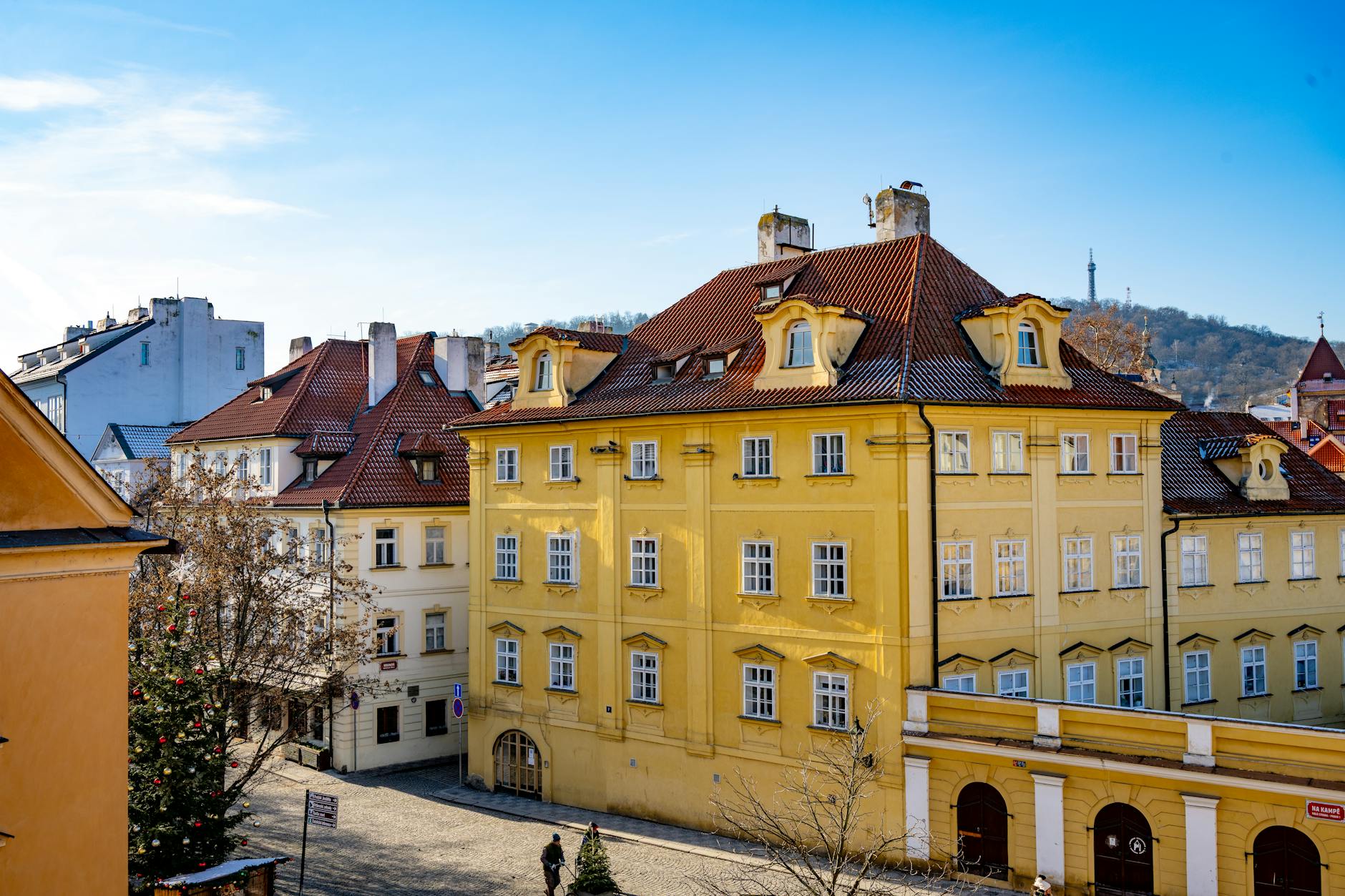
The University of Economics, Prague, often known as VSE, has become part of a wider conversation about where executive education in Europe is heading in 2026. Its presence in the regional Executive MBA rankings signals more than institutional visibility. It reflects a growing demand for business schools that combine academic credibility, practical leadership training, and strong relevance to real-world management challenges across Central and Eastern Europe.
How VSE Prague’s 2026 Executive MBA ranking reflects European trends in leadership, flexibility, and career growth for experienced professionals. #executivemba #vseprague #mbarankings #businesseducation #studyineurope #careerdevelopment
For professionals comparing Executive MBA options, rankings are often the first checkpoint. They help narrow the field, highlight schools with international recognition, and point to programs that are attracting attention from employers and senior managers. But a ranking on its own is never the full story. What matters is what sits behind that recognition: teaching quality, leadership outcomes, international exposure, employer trust, and the ability of a program to prepare executives for a more digital, more global business environment.
That is why VSE Prague’s position in the Europe 2026 Executive MBA landscape deserves a closer look. For prospective students, employers, and education watchers, it offers insight into how one of Central Europe’s best-known business universities is being evaluated in a competitive market increasingly shaped by technology, flexibility, and strategic leadership needs.
Why Executive MBA rankings still matter in 2026
Executive MBA rankings continue to influence decision-making because they simplify a crowded market. Europe has no shortage of business schools, and many offer strong leadership programs for experienced professionals. A ranking can act as an early signal that a program has earned visibility for its outcomes, learning environment, and reputation.
In 2026, the value of rankings is also tied to economic uncertainty and professional mobility. Mid-career and senior professionals are more careful about where they invest their time and money. An Executive MBA is not only a classroom experience. It is a strategic career decision involving tuition costs, time away from work, network value, and long-term return on investment.
Well-known frameworks such as the QS Executive MBA Rankings Europe typically assess schools through a mix of employer reputation, executive profile, thought leadership, career impact, and program diversity. Even if applicants should never rely on rankings alone, those benchmarks still help identify institutions that are performing well against regional expectations.
For schools like VSE Prague, ranking recognition can also broaden international awareness. It tells candidates outside the Czech Republic that the university belongs in the same conversation as other respected European providers of executive education.
Why VSE Prague stands out in the European EMBA conversation
The University of Economics, Prague has long held a strong reputation in economics, business, finance, and management. Located in one of Europe’s most attractive and strategically connected capitals, VSE benefits from a setting that blends academic tradition with modern business relevance. Prague itself has become an important destination for international companies, startups, financial services firms, and regional headquarters.
That context matters for an Executive MBA. Senior professionals do not choose programs based only on classroom teaching. They also look at the business ecosystem surrounding the school. A city with a strong mix of local enterprise, multinational activity, and cross-border economic connections creates a more dynamic environment for case discussions, networking, guest lectures, and applied projects.
VSE Prague’s appeal likely rests on this balance. It offers the credibility of a recognized economics university while operating in a region where business transformation is happening quickly. That makes the school especially relevant for professionals interested in leadership across Central Europe, European markets, and internationally connected sectors.
Central European perspective with international reach
One reason business schools in Prague attract attention is that they occupy an interesting middle ground. They are close enough to Western European business networks to stay internationally connected, while also offering valuable insight into emerging market dynamics, regional supply chains, and post-digital transformation strategies across Central and Eastern Europe.
For executives working in manufacturing, logistics, finance, consulting, technology, public administration, or international trade, this perspective can be especially useful. Leadership in Europe increasingly requires an understanding of both mature and fast-evolving markets. Schools that can teach from that intersection often bring something distinctive to the Executive MBA experience.
What a strong ranking usually reflects
Although every ranking uses its own methodology, a respected Executive MBA position typically points to a combination of qualities rather than a single standout factor. For readers trying to understand what VSE Prague’s 2026 recognition may represent, several areas are worth focusing on.
Academic quality and business relevance
A high-performing EMBA program must do more than teach management theory. It needs to connect finance, strategy, operations, leadership, innovation, and global economics to the current pressures faced by experienced professionals. That means discussing AI adoption, geopolitical risk, sustainability reporting, market expansion, talent shortages, and digital operating models in practical terms.
If a program is being recognized at the European level, it usually means participants are not just reading case studies from the past. They are engaging with contemporary business problems that executives are actually solving now.
Experienced faculty and practitioner input
Executive education works best when the classroom includes a healthy mix of research-led teaching and practitioner insight. Faculty quality matters, but so does the ability to translate complex concepts into leadership decisions. Programs that perform well often bring together professors, industry specialists, and guest speakers who can move between strategy and execution without losing depth.
That balance is essential for senior managers. Executives are not looking for generic business lessons. They want frameworks they can take back into boardrooms, teams, and transformation projects almost immediately.
Peer network and cohort strength
For many EMBA students, the network is one of the biggest reasons to enroll. A good cohort creates a powerful exchange of perspectives across industries, functions, and countries. Learning from classmates who lead teams, manage budgets, launch products, or run business units adds value that no textbook can fully reproduce.
When a school gains ranking visibility, it often becomes more attractive to stronger candidates, which in turn can improve the quality of future cohorts. That creates a positive cycle for the program and for alumni outcomes.
Career progression and employer confidence
An Executive MBA should help professionals move forward, not just collect another credential. Career impact can show up in promotions, larger leadership responsibilities, higher compensation, cross-border roles, advisory positions, or successful career pivots. Even when outcomes vary by individual, rankings often reward schools that demonstrate meaningful employer recognition and executive advancement.
For VSE Prague, this aspect may be particularly relevant because many professionals in the region are seeking leadership credentials that combine local understanding with international business credibility.
Flexibility for working professionals
In 2026, flexibility is no longer a bonus feature. It is a core expectation. Executive MBA participants are balancing full-time work, travel, family commitments, and often demanding leadership roles. Schools that perform well increasingly offer structures that support this reality, such as modular formats, intensive blocks, hybrid learning elements, or schedules designed around executive availability.
A program that respects the realities of working professionals tends to be more effective because students can stay engaged without compromising their performance at work.
Why Prague adds strategic value to the experience
Location still matters in executive education, and Prague offers a compelling combination of accessibility, business energy, and quality of life. It is well connected to major European cities, attractive to international students, and widely recognized as a center for commerce, tourism, finance, and technology-driven growth.
For EMBA participants, that environment can shape the learning experience in subtle but important ways. A city that draws global talent and business investment tends to create richer networking opportunities, stronger corporate links, and a more internationally minded student body. It also helps that Prague is a place where many professionals are willing to travel for short residential sessions, company visits, or executive seminars.
There is also symbolic value in studying leadership in a city that bridges different parts of Europe. For executives managing regional teams or international partnerships, that setting can reinforce the practical, cross-border mindset needed in modern management.
Who should consider an Executive MBA at VSE Prague
An Executive MBA is not designed for everyone. It is usually best suited to professionals who already have significant work experience and want to sharpen their leadership capacity rather than start from scratch. In that context, VSE Prague may appeal to several types of applicants.
-
Mid-career managers preparing for senior leadership or general management roles.
-
Technical specialists who need stronger strategic, financial, and organizational decision-making skills.
-
Entrepreneurs and business owners looking to scale operations more systematically.
-
Professionals working across Central and Eastern Europe who want a regionally relevant but internationally recognized business education.
-
Executives seeking a program in a major European capital without limiting themselves to the most saturated MBA markets.
For students or early-career professionals who are not yet ready for an EMBA, building business and digital fluency first can be a smart step. Practical pathways such as AI and machine learning training, data analytics and data science experience, or broader internship opportunities across business and technology can create a strong base before stepping into executive education later on.
How to read rankings without oversimplifying them
One of the biggest mistakes applicants make is treating rankings like a final answer instead of a starting point. A school can be highly ranked and still be the wrong fit for a particular executive. Another program may sit lower on a list but offer a better industry network, teaching style, location, or schedule for your needs.
When evaluating VSE Prague or any other Executive MBA in Europe, it helps to ask better questions:
-
Does the curriculum match the leadership challenges I am facing now?
-
Will the cohort expose me to industries and perspectives that broaden my thinking?
-
Is the format realistic for my workload and personal commitments?
-
Does the school have employer credibility in the markets where I want to grow?
-
Will the network still matter to me five years after graduation?
These questions often reveal more than a ranking table does. They also shift the focus from prestige alone to practical value, which is especially important for experienced professionals making a high-stakes educational investment.
Digital leadership is reshaping Executive MBA expectations
Another reason European EMBA rankings matter more in 2026 is that the profile of leadership itself is changing. Executives now need enough digital understanding to lead transformation even if they are not engineers or data scientists. Strategy discussions increasingly include automation, cybersecurity, AI governance, digital product thinking, customer analytics, and cloud-enabled business models.
That does not mean every Executive MBA must become a technical degree. It does mean the strongest programs can no longer treat digital change as a side topic. Business leaders are expected to make informed decisions about technology investments, talent strategies, process redesign, and risk management. Schools that integrate these themes well are likely to remain more competitive in rankings and more valuable to students.
For VSE Prague, this creates an opportunity. A business school rooted in economics and management can add significant value by helping executives connect market logic, operational performance, and digital transformation into one coherent leadership toolkit.
What applicants should examine before applying
If you are considering VSE Prague’s Executive MBA or comparing it with other programs in Europe, a careful evaluation process is worth the effort. Beyond the ranking, look at the practical details that shape the student experience and career payoff.
-
Curriculum depth: Review whether the program covers strategy, finance, leadership, innovation, digital transformation, and international business in a meaningful way.
-
Cohort profile: Find out who your classmates are likely to be in terms of experience, nationality, and industry background.
-
Faculty access: Consider whether the teaching model encourages interaction, discussion, and personalized feedback.
-
Corporate links: Look for evidence of guest speakers, employer relationships, and strong alumni engagement.
-
Schedule design: Make sure the structure fits your work rhythm and travel capacity.
-
Career relevance: Ask how the program supports leadership advancement, entrepreneurship, or transitions into more strategic roles.
-
International exposure: Check whether the learning environment reflects the cross-border nature of modern business.
Applicants should also speak with alumni where possible. Rankings reveal visibility, but alumni often reveal whether the experience truly delivered on its promise.
What VSE Prague’s ranking says about European business education
The bigger story here is not only about one institution. It is about how European executive education is broadening. For years, attention in the MBA world focused heavily on a small number of cities and schools. That is changing. Professionals are increasingly willing to consider programs outside the most obvious markets if those programs offer quality, flexibility, strong networks, and regional strategic value.
VSE Prague’s recognition in the 2026 Executive MBA environment suggests that Central Europe is becoming more visible in leadership education. That matters because the future of business in Europe will not be shaped by one region alone. Growth, talent, supply chains, innovation, and investment are spread across a much wider map.
For employers, this can be good news. It expands the pool of business schools producing leaders with both international awareness and practical knowledge of complex European markets. For students, it creates more meaningful choice. And for universities, it raises the bar: reputation now depends not only on history, but on responsiveness to modern leadership needs.
A smart EMBA choice is about fit, timing, and long-term value
VSE Prague’s place in the Europe 2026 Executive MBA conversation should be read as a sign of momentum and relevance. It points to a university operating in a strong business city, serving professionals who need applied leadership education, and gaining visibility in an increasingly competitive European market.
Still, the smartest applicants will go beyond the headline. They will look at curriculum design, cohort strength, delivery format, regional business ties, and how well the program aligns with their next five to ten years of career goals. That is where the real value of an Executive MBA is decided.
For professionals who want a credible European leadership qualification in a city that sits at the crossroads of business, economics, and international opportunity, VSE Prague is clearly a school worth watching closely.
#executivemba #vseprague #mbarankings #businesseducation #studyineurope #careerdevelopment