
Excerpt: Verizon’s $1 billion dark fiber deal with Google signals a bigger shift in AI infrastructure, where telecom networks are becoming critical for data center connectivity and future cloud growth. #darkfiber #aidatacenters #verizon #googlecloud #telecom #cloudinfrastructure
The race to build AI infrastructure is no longer confined to semiconductor plants and hyperscale server halls. It is also happening beneath city streets, across regional backbones, and inside the fiber routes that connect one compute-heavy campus to another.
That is why Verizon’s $1 billion agreement with Google stands out. On paper, it is a major connectivity deal built around dark fiber. In practice, it reflects a deeper industry shift: AI data centers now require far more than power and GPUs. They need ultra-capacity, low-latency, resilient links that let workloads move quickly between sites, support distributed training, and keep cloud services responsive at scale.
For web readers following telecom, cloud, and AI infrastructure, this deal is a reminder that networks are no longer a background utility. They are becoming a competitive asset. The companies that already own fiber, especially underused fiber, are suddenly sitting on infrastructure that is far more valuable in the age of generative AI.
Why This Deal Is Bigger Than a Standard Telecom Contract
Verizon’s arrangement with Google is notable because it builds on infrastructure that already exists. Rather than pouring money only into brand-new long-haul routes, Verizon is tapping dark fiber in its portfolio to connect data centers across the United States. That matters because dark fiber can be activated faster than entirely new network builds, often at a lower capital cost.
In a market where AI demand is rising faster than many operators expected, speed matters almost as much as scale. Cloud providers, model developers, and enterprise AI platforms cannot wait years for ideal infrastructure in every corridor. They need connectivity now, especially when large model training and inference workloads are spread across multiple facilities.
The immediate value of the deal comes from three practical advantages:
- Bandwidth headroom: Dark fiber offers room for future capacity upgrades as demand grows.
- Lower latency paths: Direct fiber routes can improve performance between AI clusters.
- Operational control: Dedicated infrastructure reduces reliance on congested shared networks.
It also reinforces Verizon’s broader AI Connect strategy, which is designed to support the growing infrastructure needs of AI-driven businesses. The Google agreement looks less like a one-off win and more like the opening move in a longer campaign.
What Dark Fiber Really Means in the AI Era
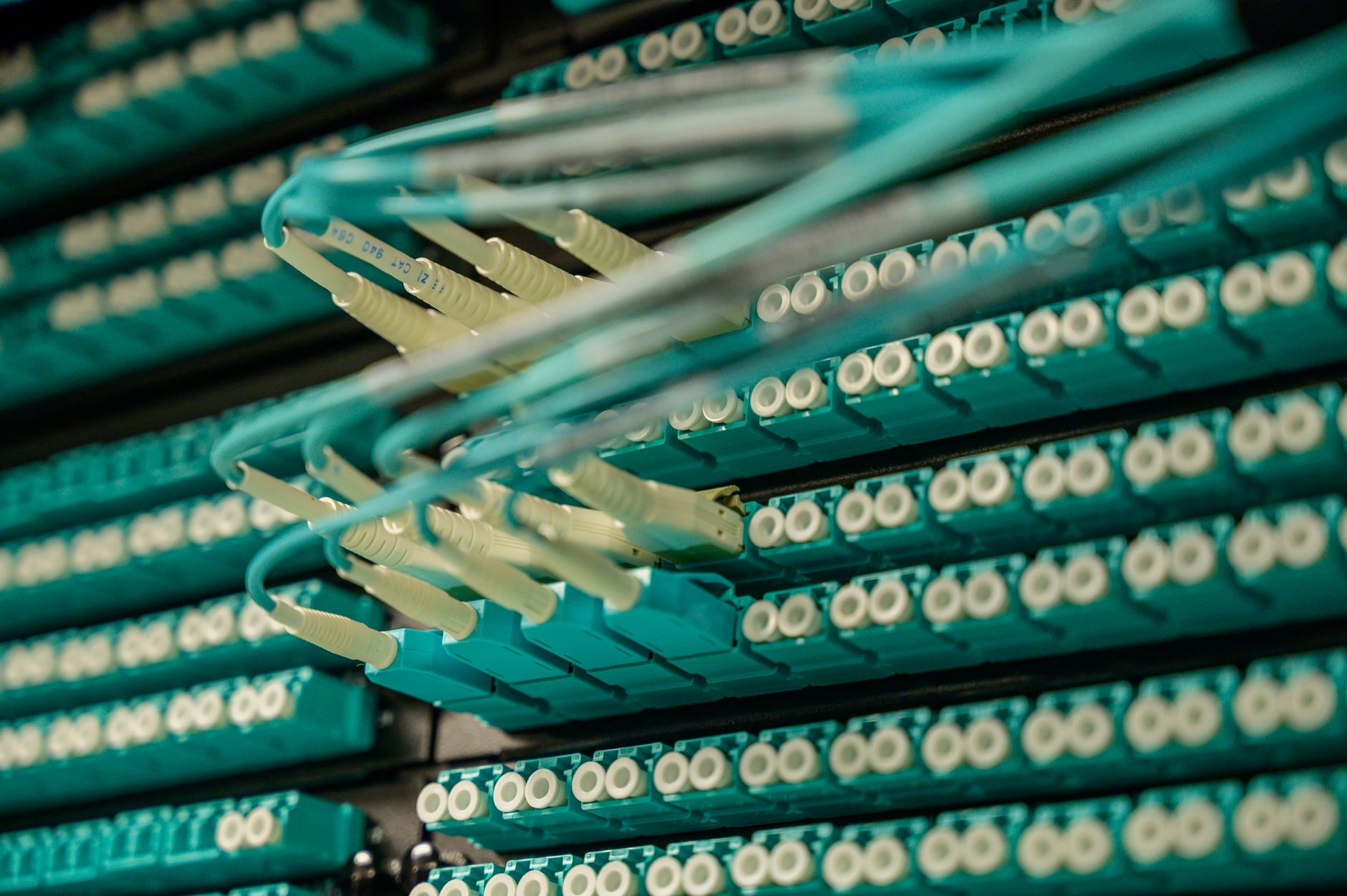
Dark fiber refers to installed fiber-optic cables that are not currently lit, meaning they are present physically but not yet active with transmission equipment. For years, much of this capacity sat underused after earlier telecom expansion cycles. In the late 1990s and early 2000s, operators built aggressively. Some of those networks became oversized for the market at the time, and the fiber remained dormant.
Today, that dormant capacity looks like a strategic reserve.
AI workloads are changing the economics of infrastructure. When companies need to move massive data sets between storage clusters, training nodes, edge environments, and backup facilities, every layer of the stack matters. That includes the transport layer. The more compute is distributed geographically, the more valuable high-performance connectivity becomes.
Dark fiber is especially attractive in this environment because it can be tailored to demanding use cases. Instead of buying generic network access, a major customer can secure dedicated routes, engineer traffic more precisely, and scale optics over time as requirements increase.
That flexibility is one reason many experts view fiber ownership as a long-term moat. Unlike trend-driven software markets, physical network routes are difficult to replicate quickly. Permitting, trenching, right-of-way access, and regional deployment all create barriers that favor companies with existing infrastructure.
Why AI Data Centers Need Better Interconnection
AI data centers are not isolated buildings. They are part of a system. Training a frontier model or running large-scale inference often involves movement between storage pools, accelerator clusters, orchestration layers, disaster recovery environments, and sometimes specialized sites in different regions.
That creates a new networking challenge. Traditional data center connectivity was important, but AI makes the requirement more intense.
Distributed compute is becoming normal
One of the biggest myths about AI infrastructure is that everything happens inside a single giant campus. In reality, companies increasingly distribute workloads across locations for redundancy, cost management, power availability, and regional service delivery. That means the links between data centers must behave like an extension of the computing environment itself.
If those links are slow, unreliable, or expensive to scale, the compute investment around them becomes less efficient.
Data gravity is growing
Large AI models depend on enormous data volumes. Once data accumulates in a particular cloud region or storage cluster, moving it becomes a strategic question. Better fiber interconnect helps reduce friction between where data lives and where compute is available.
This is especially relevant for companies operating across cloud, hybrid, and edge environments. Enterprises may train in one place, fine-tune in another, and serve models closer to end users. Reliable fiber is what makes that choreography practical.
Latency is now a business issue
For some AI services, milliseconds matter. Real-time analytics, autonomous systems, industrial automation, and interactive AI products all depend on predictable response times. Verizon has already highlighted demand from smaller AI-driven operations, including robotaxi-related deployments, where fast network provisioning and low-latency support are crucial.
As AI expands beyond chat interfaces into operational systems, network performance becomes more visibly tied to revenue, safety, and user experience.
Verizon’s Infrastructure Play Looks Timed for a New Cycle
Verizon’s momentum in fiber is not happening in isolation. Its acquisition of Frontier Communications significantly expanded its footprint, increasing its reach across more states and strengthening its position in markets where fiber depth matters. That broader map gives the company more optionality when serving large enterprises and hyperscalers with multi-site requirements.
Just as important is Verizon’s willingness to modernize older network assets. The company has discussed replacing legacy copper infrastructure with fiber, a shift that reflects where telecom economics are heading. Copper networks were foundational in a different era. AI-scale traffic, cloud platforms, and software-defined enterprise operations need something else entirely.
Retiring copper and activating previously unused fiber is not only a technical upgrade. It is also a strategic reallocation of resources toward services with better long-term demand.
That matters because telecom operators have spent years navigating mature consumer markets, pricing pressure, and intense competition in mobile and broadband. AI infrastructure offers a more compelling growth lane. Instead of fighting only for retail subscribers, operators can build long-duration enterprise relationships around connectivity, managed services, and critical infrastructure support.
In that sense, Verizon’s recent moves suggest a company trying to reposition itself from a traditional carrier into a more essential infrastructure partner for the AI economy.
Why Google Benefits From This Arrangement
For Google, the logic is straightforward. AI infrastructure requires scale, resilience, and route diversity. A dedicated dark fiber partnership can help the company connect data centers more efficiently, improve flexibility for large workloads, and support future expansion without waiting for every new route to be built from scratch.
It also aligns with the broader growth of Google Cloud infrastructure, where enterprise customers increasingly expect AI services to be available with low latency and strong regional performance. As demand rises, cloud providers must think not just about compute density inside a facility, but also about how facilities communicate with each other.
Well-designed interconnection can improve:
- replication and backup efficiency
- load balancing across campuses
- multi-region service continuity
- performance for distributed AI training
- future readiness for larger model workloads
The public spotlight often falls on GPUs, custom accelerators, and model breakthroughs. Yet physical connectivity is what allows those expensive assets to work as part of an integrated system. That makes telecom partners more strategically important than they may have seemed a few years ago.
Pressure on AT&T, T-Mobile, and Cable Providers
This kind of deal also has competitive implications. Verizon’s improved results and infrastructure focus suggest that the company is trying to create a different kind of edge, one less dependent on ordinary wireless subscriber battles and more tied to next-generation enterprise demand.
For rivals, that raises an uncomfortable question: who will own the most valuable network relationships in the AI buildout?
AT&T, T-Mobile, cable broadband players, and regional fiber operators all have assets that matter. But not every company has the same combination of long-haul routes, metro depth, enterprise sales capacity, and readiness to activate dark fiber at scale. If Verizon can repeatedly turn existing assets into large AI connectivity contracts, it may gain leverage in a market that extends far beyond consumer telecom.
That could reshape how investors and customers evaluate carriers. Instead of asking only who has the strongest wireless growth, the market may increasingly ask who can become indispensable to AI infrastructure development.
What Students and Tech Professionals Should Watch
This story is also relevant for people building careers in technology. AI headlines often focus on model development, prompting many learners to think only about coding, prompt design, or data science. Those skills matter, but AI growth also depends on cloud architecture, network engineering, data center operations, cybersecurity, and infrastructure automation.
In other words, the AI economy creates opportunity far beyond model training roles.
Skills gaining importance
- Fiber and network architecture: Understanding latency, routing, transport, and capacity planning.
- Cloud operations: Managing distributed compute and storage across multiple environments.
- Infrastructure automation: Using software tools to provision, monitor, and optimize large systems.
- Data center reliability: Designing resilient systems with redundancy and failover.
- Security: Protecting high-value AI infrastructure and sensitive data paths.
Students interested in these areas can benefit from hands-on pathways such as cloud computing and DevOps internship programs or practical exposure through AI and machine learning internships. For those still exploring where they fit, broader internship opportunities across tech domains can help connect classroom learning to real infrastructure problems.
The biggest takeaway is simple: AI is not only a software revolution. It is a full-stack transformation. The networking layer, once overlooked by many newcomers to tech, is becoming central to performance, cost, and scalability.
Challenges Verizon Still Has to Navigate
Even with strong positioning, no operator gets a free pass in this market. Turning dark fiber into sustained AI revenue will require careful execution.
Verizon will need to manage several challenges at once:
- Capacity planning: AI demand can rise quickly, but infrastructure commitments are long-term.
- Regional constraints: Not every route is equally useful for hyperscale expansion.
- Competition: Rivals may accelerate their own fiber and enterprise strategies.
- Customer concentration: Large contracts are valuable, but overreliance on a few giant buyers can create risk.
- Technology evolution: Optical networking, edge AI, and power-aware architecture will continue to change requirements.
There is also the broader issue of coordination. AI infrastructure does not succeed with fiber alone. Power availability, land access, cooling, regulation, and hardware supply all influence how quickly new data center capacity can come online. Fiber is critical, but it is one piece of a tightly linked ecosystem.
The Next Phase of AI Growth May Be Hidden in Plain Sight
For years, dark fiber sounded like an old telecom term from a previous infrastructure boom. Now it is back at the center of a modern AI conversation. That shift says a lot about where the market is heading.
As more AI data centers are approved, built, and interconnected, the value of existing fiber corridors is likely to rise. Telecom companies with deep infrastructure reserves may find themselves in a stronger position than many observers expected. Meanwhile, cloud providers and AI firms will continue looking for ways to secure the transport capacity needed to keep massive compute systems working together efficiently.
Verizon’s deal with Google is important not simply because of its price tag, but because it shows how the network layer is becoming a strategic battleground. In the next wave of AI expansion, the winners may not be defined only by who owns the best chips or the biggest models. They may also be defined by who can connect everything, reliably and at scale.
#darkfiber #aidatacenters #verizon #googlecloud #telecom #cloudinfrastructure