
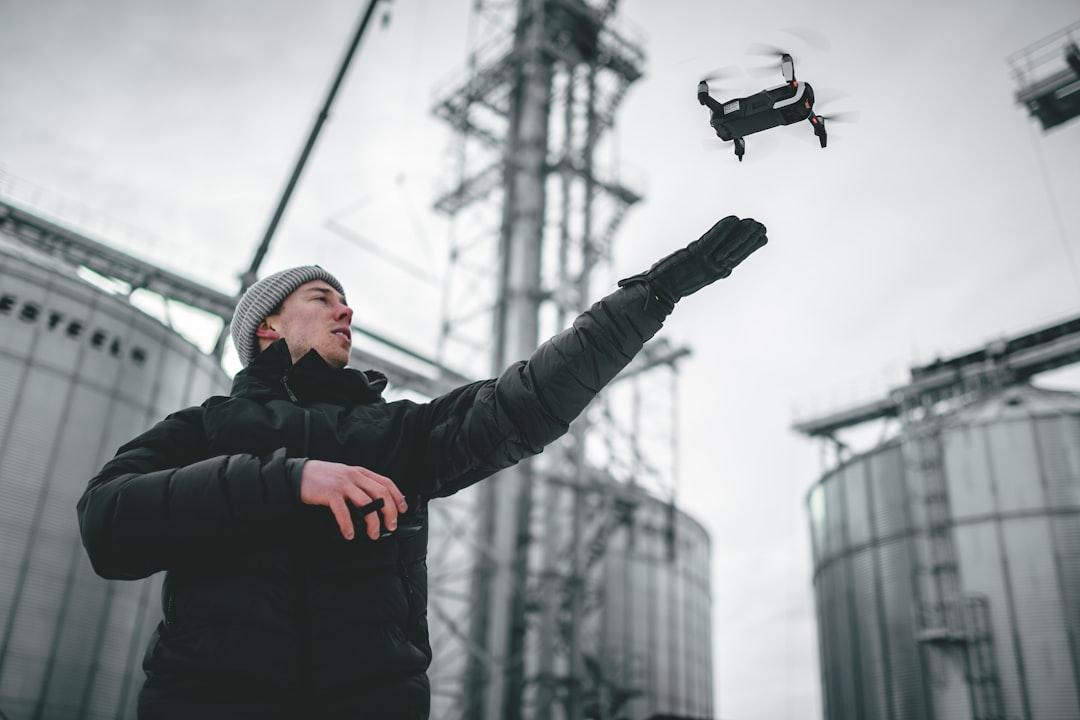
U.S. limits on foreign drones and robots are meant to protect security and rebuild supply chains, but China’s manufacturing scale could redirect the race rather than end it. The bigger battle is over cost, software, talent, and global market access. #drones #robotics #supplychain #chinatech #cybersecurity #innovation
Drones and robots are no longer fringe technologies reserved for hobbyists, research labs, or futuristic product demos. They now sit at the center of logistics, agriculture, inspection, construction, public safety, warehousing, and advanced manufacturing. That is why the United States is taking a harder line on foreign-made systems, especially products tied to Chinese supply chains. Policymakers increasingly see drones and robotics as part of a broader strategic competition involving data security, industrial resilience, and long-term technological leadership.
At first glance, the logic seems straightforward: if Washington limits access to foreign-made drones and connected robots, domestic alternatives should gain room to grow. But the global market is rarely that simple. China’s real advantage is not just a handful of successful brands. It is scale. It has dense manufacturing ecosystems, deep component supply, fast iteration cycles, lower costs, and the ability to serve international buyers at volume. As a result, barriers in the U.S. may not stop the competition so much as redirect it into new regions, new business models, and new supply routes.
That makes this a bigger story than a trade dispute or procurement debate. It is a test of how countries build trustworthy technology ecosystems, how companies manage hardware dependency, and how students, engineers, and founders should prepare for the next wave of robotics innovation.
Why this matters far beyond the drone industry
When people hear the word drone, they often think of aerial photography or consumer gadgets. In practice, drones are becoming critical business tools. Utilities use them to inspect power lines. Farmers use them for precision spraying and crop analysis. Ports and industrial sites use autonomous systems for monitoring. Emergency responders rely on them for rapid situational awareness. The same story is playing out in robotics, where mobile machines and intelligent automation are transforming warehouses, hospitals, factories, and campuses.
Because these machines collect data, move through physical space, and increasingly connect to cloud platforms, they raise a different class of questions than ordinary electronics. Who controls the software updates? Where does the operational data go? Can the system be audited? Are components traceable? If geopolitical tensions intensify, can the supply chain still function?
Those questions matter to government buyers, but they also matter to enterprises, universities, and startups. If the U.S. restricts low-cost imports without creating strong alternatives, smaller organizations may face higher prices and slower adoption. If those policies successfully encourage domestic production and secure software ecosystems, the result could be a healthier long-term market. The outcome depends on whether restrictions are paired with real capacity building.
What the U.S. is trying to accomplish
Security concerns are driving the first wave
The immediate push behind tighter controls is security. Connected drones and robots can gather video, thermal imagery, mapping data, geolocation trails, and operational metadata. In sensitive environments, that creates obvious concerns. Governments do not want critical infrastructure, military-adjacent facilities, or public safety agencies relying on systems whose software, cloud pathways, or hardware components cannot be fully trusted or independently verified.
That is why restrictions often focus on procurement rules, certification pathways, and trusted vendor lists rather than simple consumer preference. Agencies are thinking about secure firmware, software supply chains, remote access risks, and the possibility of hidden dependencies inside apparently ordinary equipment. The U.S. Bureau of Industry and Security reflects this broader policy shift, where technology security and industrial competitiveness are increasingly linked.
- Data exposure: flight logs, imagery, and telemetry can reveal sensitive patterns.
- Software control: cloud services and update pipelines may introduce hidden risk.
- Component traceability: buyers want greater visibility into batteries, radios, chips, and control modules.
- Operational resilience: organizations need confidence that critical tools will remain available and supportable during geopolitical disruption.
Industrial policy is the second layer
Security is only one part of the equation. The U.S. also wants more domestic capacity in advanced manufacturing, embedded systems, and autonomous technologies. In this sense, drones and robots are not isolated categories. They sit at the intersection of semiconductors, batteries, sensors, AI software, connectivity, and cloud infrastructure. Winning in robotics means building strength across an entire stack, not just assembling final devices.
Regulation plays a role here too. Commercial drone growth depends heavily on rules for operation, airspace use, and safety certification. The FAA’s UAS guidance shows how deeply policy shapes market adoption. A country can encourage domestic innovation through procurement incentives, safety standards, testing frameworks, and commercialization support, but it must do more than block rivals. It has to make local builders viable at scale.
Why China remains difficult to contain
Scale is the core advantage
China’s strength in drones and robotics is not only about one famous brand or one successful export strategy. Its advantage comes from manufacturing density. In major hardware hubs, companies can source cameras, gimbals, frames, batteries, motors, radio modules, controllers, and assembly services within tightly connected supply networks. That proximity cuts development time, reduces cost, and allows rapid product iteration.
For startups elsewhere, building a competitive drone or robot can mean months of sourcing, redesign, and supplier negotiation. In China’s hardware ecosystem, those feedback loops are often much shorter. That speed matters because robotics is still a fast-moving field. Products are constantly changing as sensor prices fall, edge AI improves, battery performance rises, and customers ask for new workflows.
The ecosystem goes from components to global distribution
Scale also creates a more complete business system. It is one thing to manufacture a flying platform or mobile robot. It is another to support mass production, repairs, replacement parts, software updates, reseller networks, and overseas deployment. Chinese firms benefit from large domestic demand, experienced contract manufacturing, and integrated export channels. That makes it easier to sell not just a product, but an affordable and repeatable operating model.
The same logic extends beyond drones into warehouse robots, inspection machines, service robots, and industrial platforms. According to the International Federation of Robotics, automation demand continues to expand globally, and suppliers with mature manufacturing bases are well positioned to capture that growth. Once scale is achieved, volume itself becomes a strategic advantage because it funds more research, better tooling, and faster product refinement.
Cost and speed still shape buying decisions
Many buyers around the world are not making procurement choices primarily through the lens of superpower competition. They are asking simpler questions: Does the system work reliably? Can we afford it? Is training available? How quickly can it be deployed? For a farm, a university lab, a small survey company, or a regional infrastructure contractor, a significant price gap can outweigh abstract geopolitical concerns.
That is why restrictions in one country do not automatically dismantle market leadership elsewhere. If China-backed supply chains remain cheaper and faster for international buyers, they can continue growing in markets outside the U.S. In some cases, stricter American barriers may even strengthen non-U.S. demand by pushing Chinese firms to expand more aggressively abroad.
If barriers rise, the competition may simply move elsewhere
Third-country manufacturing and local partnerships will matter more
One likely outcome is geographic redirection. Companies that face tighter access to the U.S. market can deepen operations in Southeast Asia, the Middle East, Latin America, Africa, and parts of Europe. They can localize assembly, work through regional distributors, license reference designs, or build white-label partnerships. In other words, the market may become more fragmented, but not necessarily less competitive.
That matters because robotics is a scale business. The more units a company ships, the more it can reduce costs, improve software, and expand support networks. If American policies cut off one channel without weakening global volume, the affected firms may still remain powerful competitors. The center of gravity simply shifts toward other markets.
Modular technology makes hard separation difficult
Robotics supply chains are increasingly modular. A drone may combine components from multiple countries, open-source software, third-party sensors, locally hosted fleet management, and region-specific payloads. A warehouse robot may use a globally mixed stack of compute modules, vision cameras, batteries, software frameworks, and cloud services. That modularity makes strict technological separation difficult to enforce over time.
It also means competition may move from finished products toward subsystems and software layers. If one kind of equipment becomes politically difficult to import, buyers may assemble alternatives from approved components, local integration partners, and custom autonomy software. The result is not a clean break, but a more complicated map of dependencies.
What this means for startups and enterprise buyers
For companies operating in the U.S., the lesson is clear: being outside a restricted supply chain is not enough on its own. The winners in this environment will be the firms that combine security, compliance, performance, and support. Buyers are becoming more sophisticated. They want to know not just where the product was assembled, but how the data is handled, how the firmware is maintained, and whether the system can integrate cleanly into existing workflows.
- Trusted data handling: local storage, controllable cloud settings, and clear governance rules matter.
- Secure software lifecycle: signed updates, patch transparency, and auditable code paths build confidence.
- Interoperability: open APIs and flexible payload support reduce lock-in.
- Lifecycle service: spare parts, repair channels, and training often matter as much as the hardware itself.
- Total cost of ownership: a slightly higher upfront price can be justified by reliability and long-term support.
That shift creates opportunity for American and allied startups, but only if they move beyond patriotic branding and solve real customer problems. A secure drone that costs too much, takes too long to ship, or lacks service coverage will struggle. A trusted robot platform with good documentation, strong software, and dependable support can win even in a price-sensitive market.
The software layer is becoming the real differentiator
Hardware attracts headlines, but software increasingly determines value. Navigation, obstacle avoidance, visual inspection, predictive maintenance, mapping, workflow automation, and fleet orchestration are where many of the competitive gains now live. This is especially true as sensors and compute become more widely available. Over time, the companies that build strong autonomy stacks may have more staying power than those relying only on commodity hardware margins.
That is one reason the talent pipeline matters so much. Students and early-career professionals exploring AI & Machine Learning internships are entering a field where computer vision, edge inference, and perception are central to next-generation drones and robots. At the same time, fleet management depends on cloud infrastructure, deployment pipelines, and device reliability, making experience in Cloud Computing & DevOps increasingly relevant to robotics teams.
Security is also no longer an afterthought. Connected machines need identity management, encrypted telemetry, access controls, secure boot, and resilient update mechanisms. For readers interested in the defensive side of this ecosystem, hands-on exposure through Cyber Security & Ethical Hacking internships can map directly onto the real-world challenges of protecting autonomous systems.
Skills students and researchers should pay attention to
The tightening relationship between policy, robotics, and supply chains is creating new career paths. This is not just about designing drones. It is about systems thinking across hardware, software, regulation, and operations. Universities, technical programs, and innovation labs are increasingly expected to prepare learners for that broader reality.
- ROS and robotics software frameworks for integrating sensors, controls, and autonomy.
- Computer vision and sensor fusion for perception, mapping, and object detection.
- Embedded Linux and edge AI for on-device intelligence and efficient deployment.
- Battery systems and power management for endurance, safety, and performance.
- Cloud dashboards and device operations for managing fleets at scale.
- Regulatory literacy for understanding airspace, safety, privacy, and procurement constraints.
- Supply-chain awareness for designing systems that remain buildable under shifting trade conditions.
Research institutions will feel these pressures too. If imported systems become costlier or harder to procure, open platforms and modular toolchains may become more valuable in academic labs. That could encourage more local prototyping, deeper interdisciplinary work, and stronger collaboration between engineering, computer science, public policy, and business programs.
Students looking for broader pathways into applied technology can also benefit from exploring internship opportunities across software, data, and emerging tech, since robotics increasingly sits at the overlap of all three.
The policy questions that will shape the next phase
Can the U.S. build enough domestic capacity?
This is the central question. It is one thing to identify security risks; it is another to replace large-scale manufacturing ecosystems. To compete effectively, the U.S. and its partners need more than final assembly lines. They need suppliers for motors, batteries, sensors, communication modules, and specialized electronics. They need test facilities, certification pathways, skilled technicians, and investors willing to back hardware timelines that are often slower than pure software startups.
Will allies align around standards?
Global coordination matters. If allied countries adopt shared expectations around security, transparency, and interoperability, trusted vendors gain a clearer path to scale. If every market uses different definitions and procurement rules, fragmentation can make it harder for new entrants to compete. Standards may prove more important than slogans because they shape what products can actually be sold and trusted internationally.
Can trust become a market advantage?
The most promising scenario for Western suppliers is not simply excluding rivals. It is turning trust into a product advantage. That means transparent governance, strong documentation, independent testing, secure software pipelines, and customer control over data. In sectors such as energy, public safety, infrastructure, and enterprise logistics, many buyers will pay a premium for reduced operational risk if the performance gap is small enough.
Winning the robotics decade takes more than barriers
The U.S. can slow exposure to risky supply chains through tighter rules, but restrictions alone do not create industrial leadership. To lead in drones and robotics, a country needs affordable systems, skilled talent, active developer ecosystems, accessible commercialization pathways, and sustained investment in both hardware and software. It also needs institutions that help startups cross the difficult gap between prototype and production.
That is the real takeaway from the current moment. China’s scale means the global race does not stop when one market closes a door. It adapts. It reroutes. It finds new buyers, new assembly locations, and new combinations of hardware and software. For American policymakers and companies, the challenge is not just to build walls around vulnerable systems, but to build something stronger on the inside: a competitive ecosystem that developers want to build for, customers want to buy from, and researchers want to advance.
In drones and robotics, the long-term winners will be those who combine security with usability, policy with production, and innovation with scale. That is a harder task than blocking imports, but it is the only path to durable leadership in an industry that is quickly becoming foundational to how the world moves, monitors, manufactures, and modernizes.
#drones #robotics #supplychain #chinatech #cybersecurity #innovation