
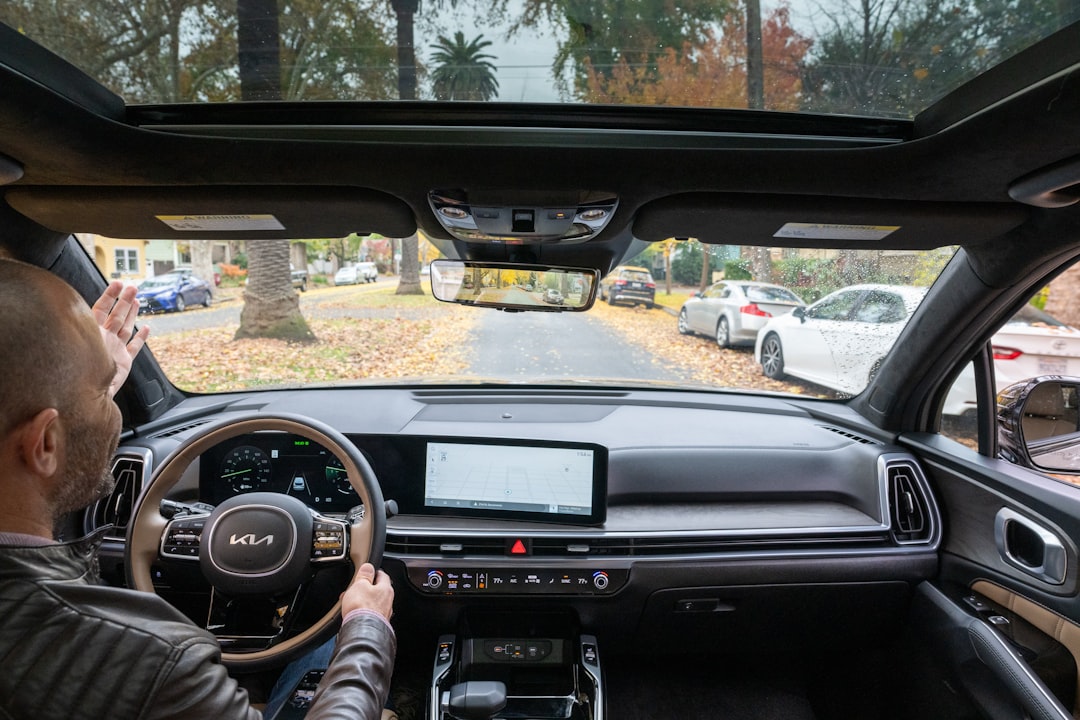
The removal of traditional AM/FM radio from modern vehicles might sound like a minor design choice, but for many drivers, it signals a bigger shift in how automakers think about convenience, connectivity, and life on the road. Rivian’s decision to move away from built-in radio tuners has sparked fresh debate, especially among future R2 buyers who picture the compact electric SUV in exactly the kinds of places where mobile coverage is weakest: mountain roads, forests, deserts, and campsites far from the nearest tower.
As more EV makers drop AM/FM tuners, Rivian’s approach is exposing a bigger issue: streaming depends on signal, but adventure driving often does not. For off-grid drivers, radio is still about convenience, reliability, and resilience. #rivian #electricvehicles #fmradio #connectedcars #offgriddriving #infotainment
For a brand built around adventure, exploration, and outdoor lifestyle marketing, the reaction is understandable. Rivian fans are not just asking for another entertainment feature. They are questioning whether a vehicle designed for remote travel should depend so heavily on a smartphone connection for something as basic as listening to music, local stations, weather updates, or news on the go.
The issue touches more than nostalgia. It reflects the growing tension between software-first vehicle design and the practical needs of real-world drivers.
The quiet disappearance of car radio
For decades, terrestrial radio was one of the most universal features in any car. It worked without logging in, without pairing a device, and without consuming mobile data. Drivers could cross city limits, rural highways, and state lines with little more than a quick scan through available stations.
That simplicity is now fading. In many newer vehicles, especially electric models, automakers are reducing hardware they see as nonessential. AM radio has already been cut from a number of cars because of interference concerns in EV platforms, and FM is increasingly treated as optional rather than standard.
From the manufacturer’s perspective, the logic is easy to follow:
- Most drivers now use Spotify, Apple Music, YouTube Music, podcasts, or Bluetooth audio.
- Cars are becoming software-defined devices centered on screens and app ecosystems.
- Removing hardware can reduce complexity, cost, and design constraints.
- Automakers prefer connected services that fit subscription-based business models.
But what makes sense in product planning does not always translate neatly to everyday driving. A streaming-first experience feels modern in the city. It can feel limiting in the wilderness.
Why Rivian owners and R2 fans are pushing back
Rivian is not positioned as a typical commuter brand. Its vehicles are marketed around road trips, overlanding, trail access, weekend escapes, and outdoor freedom. The upcoming Rivian R2 has generated excitement precisely because it promises a more accessible electric adventure vehicle for a wider audience.
That makes the FM radio debate more emotionally charged than it might be for another automaker. Buyers are not imagining the R2 in dense urban neighborhoods with perfect 5G coverage. They are imagining it near lakes, in mountain valleys, along remote highways, and at campsites where a phone may show one fading bar or no service at all.
In that context, relying on a cellphone signal to access audio stops feeling futuristic and starts feeling fragile.
Some drivers will happily preload playlists, download podcasts, or use satellite-based alternatives. Others simply want the reassurance of a built-in feature that works instantly and independently. Radio still offers that. No pairing. No buffering. No account screen. No app update. Just sound.
Streaming works brilliantly until it doesn’t
The strongest argument against removing FM is not sentimental attachment. It is failure tolerance.
Digital services work beautifully when the network is stable. In cities and suburbs, that is often the norm. But road travel is full of edge cases. Drivers pass through tunnels, canyon roads, weather-disturbed areas, national parks, backcountry routes, and rural stretches where mobile performance drops without warning.
When that happens, streaming can become frustrating in ways that basic radio never was:
- songs stop mid-playback
- live streams cut out
- apps take time to reconnect
- voice assistants fail when data is weak
- drivers are forced to troubleshoot while on the move
For anyone planning long drives away from dense infrastructure, this is more than a small inconvenience. It changes how self-sufficient the vehicle feels.
That matters even more in EVs, where route planning, charging stops, and energy management already ask drivers to think carefully about infrastructure. Many buyers accept those trade-offs because EVs offer lower operating costs, strong performance, and cleaner mobility. What they do not expect is to lose a basic backup entertainment option at the same time.
FM radio still has practical value
It is easy to frame AM/FM as outdated technology, but that overlooks what terrestrial broadcasting still does well. FM remains one of the simplest and most resilient media systems available in a moving vehicle.
Local information without data dependency
Drivers can get traffic notes, community updates, event announcements, local sports, and regional news without opening an app or consuming bandwidth. In areas where data networks slow down during peak travel or weather events, that reliability still matters.
Immediate access in unfamiliar places
One underrated advantage of radio is discovery. When traveling through a new region, scanning local stations gives drivers an instant sense of place. You hear accents, weather conditions, local headlines, and music preferences unique to that area. Streaming is personalized, but radio is contextual.
A true backup channel
Even if a driver mostly uses Bluetooth or streaming subscriptions, FM can serve as a fallback when devices die, data plans hit limits, apps misbehave, or a passenger’s phone is unavailable. In product design, backup systems rarely attract attention until they are gone.
The wilderness use case is not niche for Rivian
For some automakers, remote driving may represent a small corner case. For Rivian, it sits close to the center of the brand identity.
The company has built its image around vehicles that feel equally at home in urban streets and outdoor terrain. Owners and prospective buyers are drawn to that blend of premium technology and rugged capability. So when customers say they want FM radio for camping trips, trailheads, and long road journeys, they are not asking for a fringe feature. They are describing a core use case.
This is what makes the criticism stick. If a luxury sedan focused on city commuting drops radio, some buyers may shrug and move on. If an adventure EV does the same, the absence feels more contradictory.
That contradiction is not just about music. It is about trust in the vehicle’s design priorities. Drivers want to believe that every omission has been tested against the places the brand encourages them to go.
There is also a resilience and safety argument
The FM debate becomes more serious when viewed through the lens of redundancy. During severe weather, wildfire conditions, storms, road closures, or infrastructure disruptions, broadcast systems can still play an important role. While many emergency communication systems now use mobile alerts and connected apps, those systems are not infallible.
Resources such as NOAA Weather Radio show why broadcast-style communication still matters in public safety planning. Even when drivers are not actively relying on radio for emergencies, the broader principle remains valuable: independent channels are useful when primary systems fail.
This does not mean FM radio replaces modern navigation alerts or smartphone-based weather tools. It means layered communication remains smart design. A vehicle aimed at long-distance and off-grid travel arguably benefits from more resilience, not less.
Why automakers keep moving in the other direction
Despite the backlash, carmakers are unlikely to reverse course across the board unless buyers make the issue financially visible. The industry is moving toward centralized computing, always-connected infotainment, and tightly managed digital ecosystems.
There are several reasons for this shift:
- Hardware simplification: fewer components can mean easier manufacturing and packaging.
- Interface control: automakers want consistent user experiences through proprietary software.
- Data and services: connected features create opportunities for subscriptions and platform engagement.
- Design philosophy: many brands now treat the cabin like a smart device rather than a traditional cockpit.
In that model, terrestrial radio can appear old-fashioned, especially when dashboards revolve around touchscreens, streaming integrations, and cloud-based personalization.
Yet this is also where product teams can become too detached from field reality. A capability may look redundant on a feature spreadsheet while remaining extremely useful in the moments customers care about most.
The broader lesson for connected vehicles
The Rivian discussion highlights a larger truth about modern mobility: connected features are excellent, but dependency is different from convenience. A cloud-powered car can deliver smarter navigation, over-the-air updates, voice control, and personalized media. Those are genuine improvements. The problem begins when basic in-car functionality becomes too tightly tied to network conditions.
That challenge is showing up across the automotive world. Vehicles now rely on software for climate controls, charging management, route planning, diagnostics, entertainment, and driver assistance systems. As this stack grows, so does the need for graceful fallback behavior.
Students and early-career technologists interested in this area can already see how automotive design overlaps with embedded electronics, connectivity, and platform engineering. The future of vehicles increasingly resembles the kind of systems explored in IoT and embedded systems training as well as cloud and DevOps-focused programs. Cars are no longer just mechanical products; they are distributed technology platforms on wheels.
That makes user-centered thinking even more important. Engineers have to ask not only what a feature can do under ideal conditions, but how it behaves when conditions are imperfect.
What buyers actually want is balance
Most drivers asking for FM radio are not rejecting technology. They are not demanding a return to the dashboard design of the 1990s. In many cases, they are the same consumers who appreciate touchscreen interfaces, app integrations, advanced driver assistance, and over-the-air improvements.
What they want is balance between modern convenience and dependable offline utility.
A well-rounded infotainment system could include:
- streaming apps for daily convenience
- Bluetooth and device casting for personal audio libraries
- download support for offline listening
- satellite options where relevant
- AM/FM capability as a low-friction backup
That kind of layered approach feels especially appropriate for adventure-oriented EVs. It respects how people actually travel rather than assuming continuous, high-quality connectivity.
Questions worth asking before buying a connected EV
The conversation around the R2 is also a useful reminder for anyone shopping for a modern electric vehicle. Buyers often focus on range, charging speed, design, and software features, but cabin functionality deserves equal attention.
Before placing a reservation or making a purchase, it helps to ask:
- Does the vehicle include AM, FM, or both?
- Which audio features require a phone connection?
- Are offline maps and offline media supported?
- What happens when the network drops in rural areas?
- Are there emergency or fallback information options built in?
These questions may sound small during a showroom demo, yet they become very real on a six-hour road trip through inconsistent coverage zones.
For students and professionals interested in how technology decisions shape customer experience, the automotive sector offers a fast-moving space to watch. From infotainment systems to vehicle connectivity, many of the skills behind these experiences intersect with broader digital careers, including hands-on opportunities listed across technology internship programs.
What Rivian and other automakers could do next
Automakers do not necessarily need to choose between an all-digital future and old-school radio. The smarter path may be selective flexibility.
Brands could offer radio hardware as an optional package, include better offline media features, or make it clearer to shoppers how entertainment functions in low-signal environments. They could also think more carefully about use-case alignment. A city-focused EV and an adventure-oriented SUV do not have identical connectivity needs.
Rivian, in particular, has an opportunity to listen closely because its customers are vocal, technically aware, and deeply invested in how the product matches the brand story. When a company markets freedom and exploration, every design decision gets measured against that promise.
The FM radio debate may seem small next to battery chemistry, autonomous systems, or charging networks. But it captures something surprisingly important about the future of transportation: premium technology should expand capability, not narrow it.
As vehicles become more software-defined, the best designs will not simply assume perfect connectivity. They will recognize that great user experience also means staying useful when the signal disappears, the road gets quiet, and the journey moves beyond the grid.
#rivian #electricvehicles #fmradio #connectedcars #offgriddriving #infotainment