
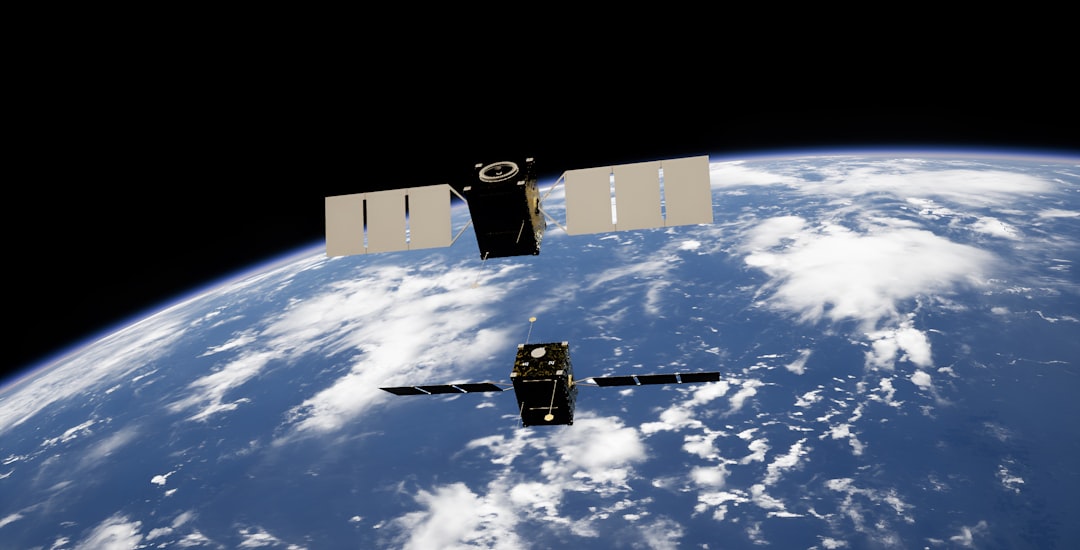
Orbital data centers may ease AI’s growing demand for power, land, and cooling, but their future depends on reliable space-to-Earth networking, predictable latency, and close integration with terrestrial cloud and edge systems. #orbitcompute #datacenters #ainfrastructure #satellitenetworks #cloudcomputing #edgecomputing
For years, the data center industry has followed a simple rule: move compute closer to people, applications, and devices. That principle helped shape everything from hyperscale cloud campuses to edge nodes placed near major cities. The goal was always the same: reduce latency, improve reliability, and support the growing digital economy.
Now artificial intelligence is putting that model under pressure. Large-scale AI training, inference, and data processing are consuming immense amounts of power, cooling, land, and network capacity. In many regions, building another massive terrestrial facility is no longer just an engineering task. It is also a political, environmental, and logistical challenge.
That is why orbital data centers are gaining serious attention. What once sounded like pure science fiction is beginning to look like a long-term infrastructure strategy. The idea is not simply to place servers in space for spectacle. It is to ask whether some future AI workloads could run in orbit, powered by abundant solar energy and freed from some of the land-based limits now slowing expansion on Earth.
But the most important question is not whether we can launch compute into orbit. It is whether that compute can communicate fast enough, consistently enough, and securely enough to matter. In other words, orbital data centers are not just a space story. They are a networking story.
Why the industry is even considering compute in space
AI has changed the scale of infrastructure demand. Training advanced models requires huge clusters of GPUs or specialized accelerators, and those systems draw extraordinary amounts of electricity. On top of that, operators need cooling systems, backup capacity, physical security, network interconnection, and access to sites where expansion is possible.
That combination is becoming harder to secure. Suitable land is limited in many markets. Power grids are already strained in some regions. Water usage and heat management create additional concerns. Local communities are also pushing back when they believe new facilities will increase costs, consume resources, or alter the character of an area.
Orbital infrastructure enters the conversation because it appears to bypass several of those bottlenecks at once. In theory, space offers:
- direct access to solar energy at a scale difficult to match on land
- fewer land-use constraints
- potentially easier modular expansion over time
- cooler environmental conditions that may reduce some thermal burdens
- new architectural flexibility for energy-intensive workloads
This does not mean orbital data centers are ready to replace conventional campuses. Far from it. Launch costs, hardware durability, maintenance, radiation exposure, and in-orbit servicing remain major hurdles. Still, the concept is being taken more seriously because AI is forcing infrastructure planners to think beyond traditional boundaries.
What orbital data centers could actually do well
Energy abundance changes the conversation
One of the strongest arguments for orbital computing is energy. Data centers on Earth compete for grid access, renewable supply, and local infrastructure upgrades. In orbit, solar power becomes far more attractive because generation is not constrained by weather in the same way as ground-based systems. If efficient collection, storage, and power management mature, orbital facilities could support especially demanding compute tasks.
This matters because the future of AI infrastructure may be defined less by chip availability alone and more by where operators can find sustainable power. A world that wants more AI also needs more electricity, and that makes energy strategy inseparable from compute strategy.
Some workloads are better candidates than others
Not every application needs to respond in real time. Some AI jobs are relatively tolerant of delay, especially when compared with interactive consumer services. Large model training, batch analytics, scientific simulation, and selected archival processing could become early candidates for off-Earth execution if networking and data transfer improve enough.
That distinction is important. The first successful orbital data center will probably not serve every kind of workload. It is far more likely to handle carefully chosen tasks where energy availability and scale matter more than ultra-low latency.
The biggest problem is one the industry already knows well
Ironically, orbital data centers revive a challenge the industry has spent decades trying to solve on land: distance. Modern infrastructure became more useful as it moved closer to users through edge computing, regional availability zones, content delivery networks, and dense fiber interconnection. Space reverses that progress.
Once compute leaves Earth, networking becomes the make-or-break factor. A terrestrial data center can plug into mature ecosystems of fiber routes, Internet exchanges, cloud on-ramps, and peering relationships. An orbital facility has none of that by default. It needs high-performance wireless links, stable handoffs, strong routing logic, and seamless coordination with the systems below.
That is why the future of orbital compute depends on far more than bandwidth headlines. Speed matters, but predictability may matter even more.
Latency is only part of the story
Low-Earth orbit may be only a few milliseconds away in simple marketing terms, but real-world application performance is shaped by more than theoretical distance. Signal routing, atmospheric interference, satellite handovers, congestion, and optical link quality all influence the experience.
For highly sensitive AI inference workloads, even 20 to 40 milliseconds can be significant. A chatbot answering a customer may tolerate some delay. An autonomous system, financial transaction engine, industrial control platform, or immersive real-time application may not. That is why the industry cannot treat orbital compute as a universal answer.
More importantly, enterprises often value consistency as much as raw speed. A stable 25-millisecond connection can be more useful than a network that swings unpredictably between fast and slow states. AI systems depend on reliable data movement across training pipelines, model distribution, inference endpoints, and storage layers. Jitter, disruption, and intermittent link quality can turn a technically connected system into a practically frustrating one.
Laser links, optical feeder systems, and atmospheric reality
Much of the optimism around orbital networking involves laser and optical communication. These approaches can potentially support high-capacity links between satellites and ground stations, but they introduce new operational complexity. Cloud cover, atmospheric turbulence, alignment precision, weather variation, and shifting orbital positions can all affect performance.
This is one reason projects from organizations such as the European Space Agency deserve close attention. The challenge is not just creating a working demonstration. It is building a dependable interconnection layer that makes orbital, terrestrial, cloud, and edge systems behave like parts of one coherent environment.
Why orbital and terrestrial infrastructure will need each other
It is tempting to frame space data centers as a replacement for land-based facilities, but digital infrastructure rarely evolves that way. New layers usually complement older ones rather than erase them. Cloud did not eliminate enterprise data centers. Edge did not replace centralized cloud regions. Satellite connectivity did not make terrestrial fiber irrelevant.
Orbital compute is likely to follow the same pattern. The real opportunity lies in workload placement. Some AI processing may benefit from abundant energy in orbit, while other tasks must stay near users, regulators, factories, hospitals, or urban networks on Earth.
That means terrestrial facilities remain essential for:
- ultra-low latency inference
- regulatory and data residency requirements
- local caching and edge delivery
- disaster recovery and operational failover
- enterprise integration with existing systems
In practice, the future looks hybrid. Workloads will move between edge locations, cloud regions, terrestrial data centers, satellite systems, and perhaps orbital platforms depending on what each job requires.
That broader infrastructure picture is already shaping how students and professionals think about modern technical careers. Anyone exploring distributed systems, automation, or large-scale operations can learn a lot from pathways in cloud computing and DevOps, where networking, reliability, and orchestration are central skills.
What has to be built before orbital compute becomes useful
Launching hardware is only one piece of the puzzle. To make orbital data centers viable, the industry needs an integrated stack that spans compute, networking, power, security, and operations.
The missing layers that matter most
- High-capacity interconnection: space-to-ground communication must support sustained data movement, not occasional transfers.
- Predictable routing: networks must intelligently direct traffic across orbital, terrestrial, and cloud environments without erratic performance.
- Standards and interoperability: isolated systems will limit adoption; shared technical frameworks will accelerate it.
- Resilience: operators need redundancy across links, ground stations, and processing layers.
- Security: data in motion between Earth and orbit must be authenticated, encrypted, monitored, and protected against interference.
- Observability: teams will need new tools to monitor performance across atmospheric and orbital conditions in near real time.
Security deserves special emphasis. AI infrastructure already attracts attention because of model theft, intellectual property concerns, and service disruption risks. Adding non-terrestrial links expands the attack surface. Future operators will need deep expertise in encryption, access control, telemetry, anomaly detection, and resilient network design. That makes disciplines such as cyber security and ethical hacking increasingly relevant to the infrastructure conversation.
Which AI workloads might move first
Orbital computing becomes easier to understand when viewed through workload categories rather than grand predictions.
Better candidates for early adoption
- batch AI training jobs that can tolerate moderate latency
- large-scale simulation and modeling
- non-interactive scientific research workloads
- energy-heavy processing scheduled around resource availability
- specialized cross-border compute where terrestrial constraints are severe
Workloads likely to stay on Earth
- real-time consumer inference
- industrial automation and robotics control
- healthcare and mission-critical response systems
- applications with strict sovereignty or compliance requirements
- services that depend on dense local interconnection
For students following the AI ecosystem, this split is a valuable lesson. AI infrastructure is not one monolithic stack. It is a collection of tradeoffs involving data gravity, energy access, networking distance, regulation, and user expectations. Those interested in the model side of this shift can explore practical foundations in AI and machine learning, where compute design increasingly intersects with infrastructure strategy.
Why networking will define the winners
The strongest companies in orbital compute may not be the ones with the boldest launch plans. They may be the ones that best understand interconnection. If users must constantly think about whether an application runs in a cloud region, at the edge, or in orbit, the architecture has failed from an experience standpoint.
The real success metric is invisibility. Workloads should move to the most efficient location without creating complexity for the end user. That requires software-defined orchestration, intelligent traffic engineering, reliable satellite handovers, and integration with existing cloud and internet exchange ecosystems.
Organizations such as DE-CIX and launch leaders like SpaceX are part of a larger shift in how the world thinks about digital infrastructure. The future will not be decided by rockets alone or by data center hardware alone. It will be decided by how effectively different layers of the network cooperate.
What this means for the next decade of digital infrastructure
Ten years from now, orbital data centers may still represent a specialized layer rather than the center of the internet. Even so, their influence could be significant. They may push the industry to redesign interconnection, rethink energy strategy, improve optical networking, and treat space as an extension of cloud architecture rather than a separate frontier.
That possibility should matter not just to infrastructure executives, but also to researchers, engineers, students, and policy thinkers. The rise of AI is forcing every part of the stack to evolve at once. Chips, networks, cooling, power systems, security, software orchestration, and regulation are all converging into one complex design problem.
Anyone who wants to understand where computing is heading should pay attention to this shift now. Even if orbital data centers remain limited at first, the lessons learned from building them will influence terrestrial networks, edge design, and the architecture of future AI platforms. For readers comparing career paths across systems, software, and infrastructure, broader options are also available through technology internship programs that connect theory with hands-on work.
If orbital compute succeeds, most people will barely notice it. They will simply use faster tools, smarter services, and more capable AI systems without caring where the processing happens. That has always been the real sign of infrastructure maturity: the technology disappears, and what remains is the value it quietly enables.
#orbitcompute #datacenters #ainfrastructure #satellitenetworks #cloudcomputing #edgecomputing