
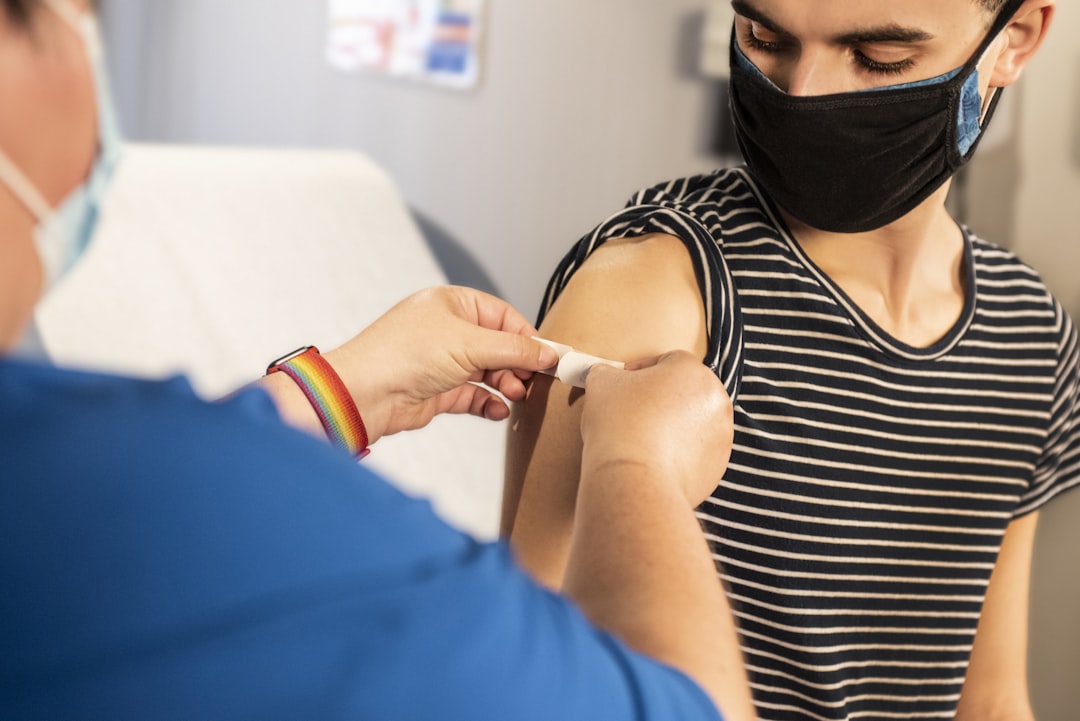
CDC data shows U.S. kindergarten vaccination rates slipping further below the 95% community protection threshold as exemptions rise. The trend raises concerns about measles, whooping cough, and local outbreak risk. #vaccines #publichealth #cdc #schoolhealth #measles #healthpolicy
The latest federal data on kindergarten immunization coverage offers a clear warning: the United States is continuing to move in the wrong direction on routine childhood vaccination. Coverage for key school-entry vaccines declined again in the 2025–2026 school year, extending a slide that began after the 2019–2020 period, when national rates were still hovering around the 95% level public health experts often cite as critical for limiting outbreaks.
At first glance, a drop of one-tenth of a percentage point may seem minor. But in public health, small national shifts can represent thousands of children. More importantly, averages can hide the sharper declines happening inside individual districts, counties, and schools. That is where outbreaks tend to begin.
The new numbers from the Centers for Disease Control and Prevention suggest a familiar and troubling pattern: vaccination coverage is easing downward while exemptions continue to climb upward. Together, those trends reduce the margin of safety communities rely on to protect children who are too young to be fully vaccinated, those with certain medical conditions, and others who remain vulnerable to preventable disease.
A quick look at the newest CDC figures
For the 2025–2026 school year, national coverage among U.S. kindergartners was:
- 92.4% for the measles, mumps, and rubella (MMR) vaccine, down from 92.5% the previous year
- 92.0% for the DTaP vaccine, which protects against diphtheria, tetanus, and pertussis, down from 92.1%
Those percentages remain well below where the country stood just a few years ago. In the 2019–2020 school year, vaccination coverage for kindergarteners was around 95%, a level associated with stronger community protection against highly contagious diseases, especially measles.
This is not simply a statistical story. It is a practical one. When rates dip below that benchmark and exemptions keep rising, communities are more likely to experience pockets of under-immunization. In those pockets, a single imported case of measles or a localized outbreak of whooping cough can spread far more easily than many parents realize.
Why 95% matters more than it sounds
The 95% figure is often discussed in relation to herd immunity, especially for measles, which is among the most contagious infectious diseases known. Measles spreads so efficiently that once vaccination coverage weakens, even slightly, the risk landscape changes quickly.
That does not mean every community below 95% will experience an outbreak. It does mean the protective buffer becomes thinner. The lower the coverage, the more openings there are for disease transmission, particularly in classrooms, childcare settings, school buses, and households with younger siblings.
Measles remains a key concern
MMR coverage tends to attract the most attention because measles can move rapidly through unvaccinated groups. Symptoms may begin with fever, cough, runny nose, and irritated eyes, but the disease can become serious, leading to pneumonia, brain swelling, hospitalization, and, in some cases, death.
Public health officials worry about measles not only because of its severity but because it can expose weaknesses in local vaccination systems very quickly. One traveler returns from abroad, a few unvaccinated children share a classroom or social setting, and a contained public health challenge can escalate into a broader community event.
Readers looking for official background can review the World Health Organization’s measles overview, which explains why even limited declines in immunization coverage can have outsized consequences.
DTaP coverage matters too
The decline in DTaP coverage also deserves attention. Pertussis, or whooping cough, can be especially dangerous for infants. Older children and adults may recover, but babies can become critically ill. When school-entry coverage weakens, the broader chain of protection around vulnerable family members also weakens.
Diphtheria and tetanus are less common in the United States thanks to long-running vaccine programs, but that is exactly the point: prevention has worked so well that it can create a false sense that the threat has disappeared. Vaccines are often victims of their own success. The diseases feel distant, so urgency fades.
Why exemptions keep rising
The rise in exemptions is one of the most important parts of the story. In many states, parents can request exemptions for medical reasons, and in some cases for religious or philosophical reasons depending on local law. The more broadly exemptions are used, the less stable overall protection becomes.
There is no single explanation for the increase. Instead, several forces appear to be intersecting:
- Misinformation online: Social platforms and fragmented media ecosystems make it easier for misleading vaccine claims to spread quickly.
- Institutional mistrust: Some families now approach health guidance, government agencies, and school requirements with greater suspicion than they did a decade ago.
- Pandemic aftershocks: The COVID-19 era reshaped how many people think about public health, mandates, and personal choice.
- Access and scheduling barriers: Missed appointments, insurance confusion, transportation challenges, and provider shortages can delay routine immunization.
- Administrative gaps: Incomplete records, delayed follow-up, and uneven school enforcement can leave children classified as exempt or noncompliant longer than necessary.
- Complacency: When parents rarely see diseases like measles or diphtheria, the perceived need for vaccination can weaken.
It is important not to treat every exemption as ideological. Some families face logistical hurdles rather than philosophical opposition. But from a public health perspective, the outcome still matters. Whether a child is unvaccinated by choice, delay, confusion, or access issues, the protective gap in a classroom is the same.
National averages can hide local danger
One of the biggest challenges in interpreting vaccination data is that national numbers smooth over local realities. A country can report coverage in the low 90s while certain counties, school systems, or neighborhoods fall much lower.
That matters because outbreaks do not spread evenly across the map. They grow where there are clusters of susceptibility. Ten under-vaccinated schools in different states are not the same as one school where a large share of children are unprotected. Concentration changes risk.
This is why state and local health departments pay close attention to school-level compliance and exemption patterns. A modest drop across the country can translate into severe vulnerability in smaller pockets. Those pockets often determine whether a virus fizzles out or gains momentum.
Families sometimes assume that if their child’s own school seems calm, the risk is low. But school communities are not sealed environments. Children interact across sports leagues, faith communities, after-school activities, camps, and extended families. Infectious disease moves through networks, not just buildings.
What schools and health systems can do now
Reversing the decline will take more than repeating that vaccines are important. The more effective approach is practical, local, and trust-based.
1. Make vaccine access easier
Extended clinic hours, mobile vaccine programs, back-to-school immunization drives, and walk-in appointments can help families who are not opposed to vaccination but struggle with time, transportation, or paperwork.
2. Improve communication before school deadlines
Clear reminders sent early and in multiple languages can reduce last-minute confusion. Parents respond better when schools explain what is required, what records are missing, and where help is available.
3. Use pediatricians as trusted messengers
Parents often trust their child’s doctor more than broad public campaigns. Brief, respectful conversations in clinical settings remain one of the strongest tools for improving vaccine confidence.
4. Track data more precisely
Better reporting systems can distinguish between true exemptions, temporary delays, incomplete documentation, and children who are simply behind on scheduling. Public health teams need timely, accurate data to respond well.
This is one reason training in data analytics and data science can be so valuable for students interested in public health systems. Immunization coverage is not just a medical issue; it is also a data quality, reporting, and forecasting challenge.
5. Protect immunization infrastructure
State registries, school record systems, and health information platforms need to be reliable and secure. Delays, interoperability problems, and privacy concerns can all weaken compliance efforts.
Behind the scenes, this work depends on strong digital operations, including cloud computing and DevOps skills that keep large-scale public systems available, accurate, and resilient during peak enrollment periods.
What parents should know before school starts
For many families, school-entry immunization requirements become urgent only when registration deadlines approach. That often leads to rushed appointments and avoidable stress. A more proactive approach can make the process much easier.
- Check your child’s immunization record well before enrollment or the next school year.
- Ask your pediatrician whether any doses are missing or whether catch-up scheduling is needed.
- Verify school-specific requirements, since state rules and timelines can differ.
- Do not assume prior attendance means records are complete; transfers and record gaps are common.
- If you have questions about safety or timing, bring them to a qualified clinician rather than relying on social media threads.
Parents who want current official guidance can review CDC SchoolVaxView resources, which provide national and state-level context on school vaccination coverage and exemptions.
For families who are hesitant, the most constructive path is often conversation rather than confrontation. Many concerns are rooted in information overload, fear, or confusion about risk. Good health communication addresses those concerns honestly while staying anchored in evidence.
Why this trend matters beyond one school year
Falling vaccination rates are not just an annual compliance problem. They are a signal about how communities are functioning. They reflect trust, access, system capacity, public messaging, and local policy all at once.
When childhood immunization coverage slips for several years in a row, the effects accumulate. More children enter school under-vaccinated. More classrooms contain susceptibility gaps. More local officials spend time containing preventable outbreaks instead of focusing on broader health priorities.
There is also a financial dimension. Outbreak response is expensive. Contact tracing, emergency clinics, public alerts, school notifications, missed work for parents, and medical treatment all create costs that are far higher than routine prevention.
For educators, these trends can become classroom issues as well as health issues. Disease outbreaks disrupt learning, raise absenteeism, and place added pressure on school nurses and administrators. In an era when schools are already managing mental health challenges, staffing pressures, and uneven attendance, preventable infectious disease adds another layer of strain.
A public health story with long-term implications
The decline in kindergarten vaccination rates should not be read as a sudden collapse. It is more accurately understood as a slow erosion of a safeguard that took decades to build. That kind of erosion can be easy to ignore until a disease takes advantage of it.
The challenge now is to respond before that happens at larger scale. That means treating vaccination not as a once-a-year administrative box to check, but as a shared public health responsibility. It also means recognizing that confidence, convenience, and credible communication all matter.
Routine childhood vaccines remain one of the most effective tools in modern medicine. The issue in 2025 is not whether they work. It is whether communities can maintain the systems, trust, and follow-through required to keep protection high enough to matter.
If the current trajectory continues, more outbreaks will become not just possible, but predictable. If coverage improves, however, the country still has time to restore the protective buffer that keeps schools safer and communities more resilient. That is the real significance of this year’s CDC data: it is less a backward-looking report card than a forward-looking warning.
#vaccines #publichealth #cdc #schoolhealth #measles #healthpolicy