
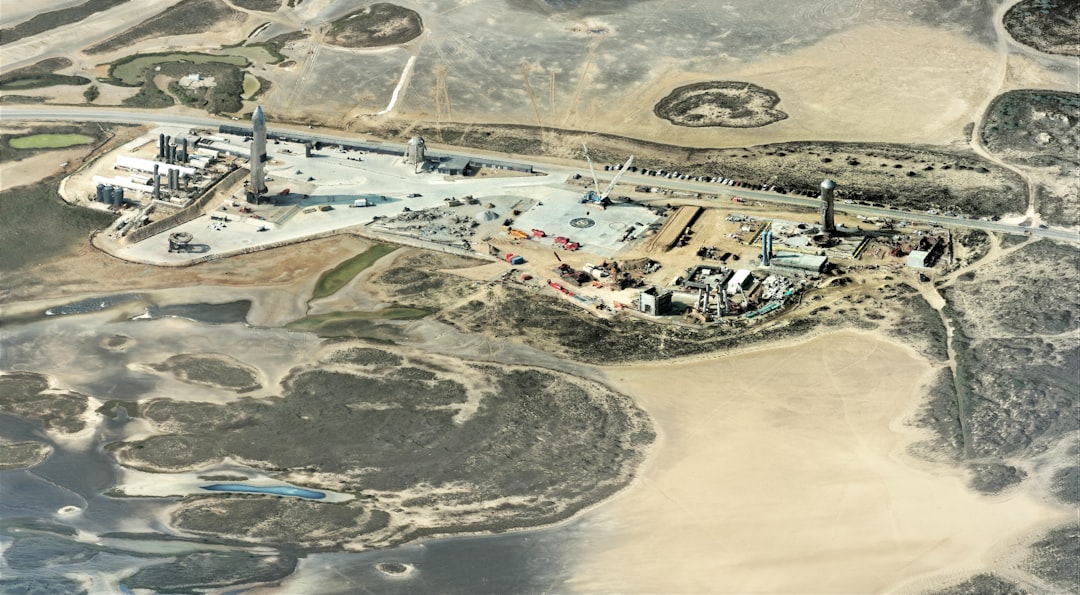
SpaceX’s 13th Starship test could mark a major step from rocket trials to practical satellite deployment, with 20 Starlink V3 spacecraft and laser-link tests onboard. #spacex #starship #starlink #spaceflight #satellitetechnology #aerospace
SpaceX is preparing for another closely watched Starship mission, and this upcoming flight has a different feel from some of the earlier tests. Previous launches were largely about proving that the massive rocket could clear the pad, survive staging, and demonstrate the basics of ascent and reentry. This time, the mission starts to look more like a real operational exercise.
The headline change is simple but significant: Starship is expected to carry real Starlink Version 3 satellites in its payload bay. That turns the flight from a pure vehicle test into a practical demonstration of how SpaceX wants Starship to support its long-term business model, its satellite internet network, and eventually a much broader vision for launch at scale.
For space industry watchers, students interested in aerospace, and engineers following next-generation launch systems, this test matters because it connects several big themes at once. It is about rocket performance, yes, but it is also about satellite deployment, orbital communications, automation, and the economics of reusable heavy-lift spaceflight.
Why Flight 13 Matters More Than a Routine Test
Starship’s 13th full-scale test flight represents more than another attempt to refine a large rocket. It signals a shift in purpose. A launch vehicle becomes more meaningful when it starts carrying real payloads, even experimental ones. That is the point at which a prototype begins moving closer to operational relevance.
SpaceX has already used earlier missions to test structural performance, engine relight behavior, staging, and recovery-related procedures. While those milestones remain essential, the inclusion of working Starlink satellites raises the stakes. A successful mission would show not only that Starship can fly, but that it can begin doing useful work while flying.
That distinction matters because Starship is designed to be the backbone of several future ambitions:
- Deploying large batches of next-generation Starlink satellites
- Lowering the cost of launching heavy payloads into orbit
- Supporting lunar and deep-space missions
- Increasing launch frequency through rapid reusability
- Creating a platform capable of missions beyond what current rockets routinely handle
In other words, this test is not just about whether Starship gets off the ground. It is about whether the system can begin proving its commercial and technical value in orbit.
What Is New on This Starship Mission
Real Starlink V3 Satellites Are Onboard
The most notable change for this mission is the presence of 20 Starlink V3 satellites inside Starship’s cargo section. SpaceX has previously rehearsed payload deployment using simulated hardware, which helped validate the ship’s deployment mechanism without risking real spacecraft.
Now the company is stepping up to functioning satellites. That may sound like a modest progression, but it is a major engineering threshold. Launching hardware that is expected to operate, communicate, and behave like real spacecraft introduces a new level of complexity. Payload handling, deployment timing, vibration tolerance, and orbital release accuracy all matter.
The Starlink V3 satellites onboard are not expected to join the operational broadband network in the usual sense. Instead, they appear to be part of a controlled test scenario. That gives SpaceX room to evaluate satellite behavior without the pressure of immediate commercial service.
Laser Communication Links Could Be a Key Demonstration
One of the most interesting objectives is SpaceX’s plan to attempt brief laser communications between these Starlink V3 satellites and other spacecraft already in low-Earth orbit. If successful, that would validate interoperability between the newer satellites and the previous Starlink generations.
This matters because satellite internet is no longer just about launching more hardware into space. Modern constellations depend heavily on networking efficiency. Laser inter-satellite links can reduce reliance on ground stations, improve routing, and support lower-latency communication across long distances.
For Starlink, successful optical cross-link testing would suggest that the V3 architecture is moving in the right direction for future expansion. For the broader space sector, it shows how launch systems and communication infrastructure are increasingly intertwined.
How the Mission Is Expected to Unfold
Although many elements may resemble the previous Starship flight, this mission still carries a layered set of technical goals. The basic flow is expected to follow a familiar pattern, but small differences can have major consequences in test programs like this.
- Liftoff: Starship and the Super Heavy booster launch together from Starbase.
- Booster separation: The Super Heavy booster detaches as planned during ascent.
- Ship continues to space: Starship proceeds on its trajectory while mission systems are evaluated.
- Payload operations: The deployment mechanism releases the Starlink V3 satellites one at a time.
- Communications testing: Engineers attempt laser-link validation with other spacecraft in orbit.
- Reentry and descent phases: As with prior tests, SpaceX will likely gather extensive data on thermal protection, control surfaces, and vehicle behavior.
Even if everything does not go perfectly, each stage can produce valuable information. That has been one of the defining features of SpaceX’s development philosophy: rapid iteration supported by real-world flight data.
Why Satellite Deployment Is a Bigger Milestone Than It Looks
From the outside, releasing satellites may seem routine. Many launch providers do it regularly. But Starship’s scale changes the equation. The vehicle is being designed to carry much larger payload volumes than traditional rockets, which means deployment systems must function reliably in a very different physical environment.
The mechanism being used here, involving pulleys and cables to eject a stack of satellites through a side opening, is central to that challenge. The hardware must operate precisely in microgravity, maintain separation safety, and avoid any accidental collisions between spacecraft.
That is especially important because Starship is intended to carry future generations of Starlink satellites that may be larger, heavier, and more capable than earlier versions launched on Falcon 9. If this deployment approach works, it could unlock a more efficient path for building out the next phase of SpaceX’s orbital network.
It also suggests a broader industry trend: the future of launch is not only about getting to orbit. It is about what happens after orbit is reached. Deployment architecture, payload integration, and in-space operations are becoming just as important as raw launch power.
What Starlink V3 Could Change
Starlink is already one of the most important commercial space projects in operation, and Version 3 satellites are expected to push that model further. While the exact capabilities of every future variant will continue to evolve, the overall direction is clear: greater bandwidth, more advanced networking, and a stronger constellation backbone.
Starlink V3 satellites are especially interesting because they align closely with the logic behind SpaceX’s Starship program. A larger launch vehicle makes it easier to deploy larger satellites, and larger satellites can potentially offer improved performance and higher throughput. The business strategy and the engineering roadmap support each other.
This is one reason the test is so important. If Starship can begin deploying V3 satellites effectively, SpaceX may gain a more scalable way to expand Starlink’s global internet infrastructure. That could influence everything from rural connectivity to maritime communications, aviation service, and emergency response capabilities.
There is also a competitive angle. Satellite internet is becoming a more crowded and strategically important field. Performance gains in orbital networking, launch efficiency, and satellite manufacturing can create a meaningful advantage.
The Engineering Challenges Still in Front of Starship
It is easy to focus on the excitement around payload deployment, but Starship still faces serious technical hurdles. The vehicle is ambitious by any standard, and every test flight reveals how difficult full reusability at this scale really is.
Thermal Protection and Reentry
One of the biggest long-term questions remains how consistently Starship can survive reentry conditions. Heat shield performance, tile durability, and aerodynamic control are all crucial for a vehicle intended to fly repeatedly. A successful ascent is only part of the story if reusability is the larger goal.
Reliability Across the Full Mission Profile
As missions become more complex, the definition of success expands. It is no longer enough for engines to fire and staging to occur. Payload bay doors, communications systems, deployment mechanisms, onboard software, and guidance systems all need to work in sequence.
That kind of systems integration is where many advanced aerospace projects become truly difficult. A single weak link can affect the entire mission.
Scaling Toward Operational Cadence
The long-term promise of Starship depends on something even harder than a successful test: repeatability. SpaceX ultimately wants a launch system that can fly often, carry large payloads, and reduce turnaround costs. That requires manufacturing consistency, infrastructure readiness, regulatory coordination, and dependable mission outcomes.
Flight 13 will not answer all of those questions, but it can provide another meaningful datapoint in how quickly Starship is maturing.
Why This Test Matters Beyond SpaceX
It is tempting to view Starship only through the lens of one company, but its progress has implications far beyond SpaceX. A heavy-lift, highly reusable launch system could reshape satellite deployment economics, scientific missions, defense space planning, and commercial in-space manufacturing.
For research institutions and universities, lower-cost access to orbit could eventually support larger instruments, more frequent experiments, and broader international collaboration. For startups, it could reduce barriers to launching hardware that would previously have been too expensive or too constrained by volume limits.
And for governments, Starship’s development feeds into wider conversations about national launch capability, space logistics, and infrastructure in low-Earth orbit and beyond.
This is one reason students and early-career professionals are paying close attention. Space is no longer a niche sector reserved for a handful of agencies and aerospace giants. It increasingly overlaps with software, networking, robotics, cloud systems, AI, data science, and cybersecurity.
What Students and Tech Learners Can Take From This Mission
One of the most valuable aspects of following a mission like Starship Flight 13 is seeing how interdisciplinary modern engineering has become. Rocket science still matters, of course, but so do simulation, telemetry analysis, embedded systems, networking protocols, and autonomous control software.
For students hoping to work in space technology, the lesson is clear: broad technical fluency can be a major advantage. Aerospace projects now rely on many of the same digital skills shaping other industries.
Relevant pathways include:
- Data analysis for flight telemetry and mission diagnostics
- Cloud infrastructure for simulation and operational monitoring
- Machine learning for anomaly detection and predictive maintenance
- Cybersecurity for satellite communications and critical systems
- Embedded systems for avionics and payload hardware
Those interested in building skills that transfer into advanced engineering environments can explore programs in data analytics and data science, hands-on training in cloud computing and DevOps, or browse a wider set of options through these technology internships. The space sector increasingly values hybrid talent that can connect software thinking with hardware realities.
What to Watch During the Launch Window
For viewers, analysts, and enthusiasts, this mission offers several moments worth following closely. Not every important development will be visible in a livestream, but the mission profile contains multiple indicators of progress.
- Initial ascent stability: A clean climb remains foundational for every later milestone.
- Stage separation performance: This continues to be one of the key moments in any Starship test.
- Ship health in orbit: Any signs of stable systems operation will matter.
- Payload deployment confirmation: This is the feature many observers will watch most closely.
- Communications test outcomes: Even brief successful laser-link activity would be meaningful.
- Reentry data: Survival and controlled descent continue to shape the vehicle’s long-term future.
It is also worth remembering that test flights are not pass-fail events in the simplistic sense often seen on social media. Aerospace development is iterative. Some objectives may be met while others fall short, and the most important results are often buried in engineering data rather than dramatic visuals.
A Test That Signals a Shift in Purpose
Starship Flight 13 stands out because it begins to connect the rocket’s enormous physical scale with practical utility in orbit. Carrying real Starlink V3 satellites, testing deployment hardware, and attempting laser communications all push the mission beyond demonstration for demonstration’s sake.
If the flight goes well, SpaceX will have taken another step toward proving that Starship can become more than an experimental launch vehicle. It could start to show how the system fits into a broader future of reusable heavy lift, high-capacity satellite deployment, and tightly integrated space infrastructure.
Even if some goals remain unfinished, the direction is becoming clearer. The story of Starship is no longer only about building the world’s biggest rocket. It is increasingly about building a launch platform that can support the next era of orbital connectivity, industrial capability, and space access at scale.
#spacex #starship #starlink #spaceflight #satellitetechnology #aerospace