
General Motors’ decision to add dozens of robot arms to its flagship electric vehicle plant in Detroit has become much more than a factory upgrade. It has turned into a sharp illustration of where modern manufacturing is headed: toward faster automation, more software-driven production, and a workforce under pressure to adapt while also demanding stability, fairness, and a meaningful role in the next industrial era.
Excerpt: GM’s latest robot rollout at Factory Zero highlights a deeper shift in EV manufacturing, where automation, labor concerns, and new technical skills are colliding on the factory floor. #evmanufacturing #automation #robotics #autoworkers #electricvehicles #futureofwork
At the center of the story is GM’s Factory Zero, an important plant in Detroit built to represent the company’s electric future. The arrival of roughly 50 new robotic arms has intensified concerns because many workers affected by layoffs earlier this year have still not returned. That tension makes this more than a business update. It is a real-world case study in how robotics, labor, economics, and industrial strategy are increasingly intertwined.
For students, engineers, developers, and anyone following the future of work, this moment is worth watching closely. The automotive sector often previews broader workplace change. What happens on the EV assembly line today can influence logistics, aerospace, electronics, warehousing, and even healthcare manufacturing tomorrow.
Why Factory Zero matters beyond one GM plant
Factory Zero is not just another production facility. It has symbolic weight.
GM has positioned it as a key site for electric vehicle manufacturing, tying it to the company’s transition away from traditional internal combustion platforms. In practical terms, that means the plant represents a major test of how legacy automakers can build EVs efficiently, consistently, and at scale.
When automation expands at a flagship site, the message reaches far beyond Detroit. Investors see it as an efficiency play. Engineers see it as a system design decision. Workers and unions see it as a signal about future staffing. Policymakers see it as part of a larger conversation about domestic manufacturing competitiveness.
The plant’s importance also comes from timing. Automakers are under pressure to improve EV margins, speed up production, and reduce defects while demand remains uneven in different parts of the market. In that environment, robotics can look like a rational investment. But when that investment arrives during an extended worker layoff, it also raises difficult questions about trust and priorities.
What the new robots are likely doing on the line
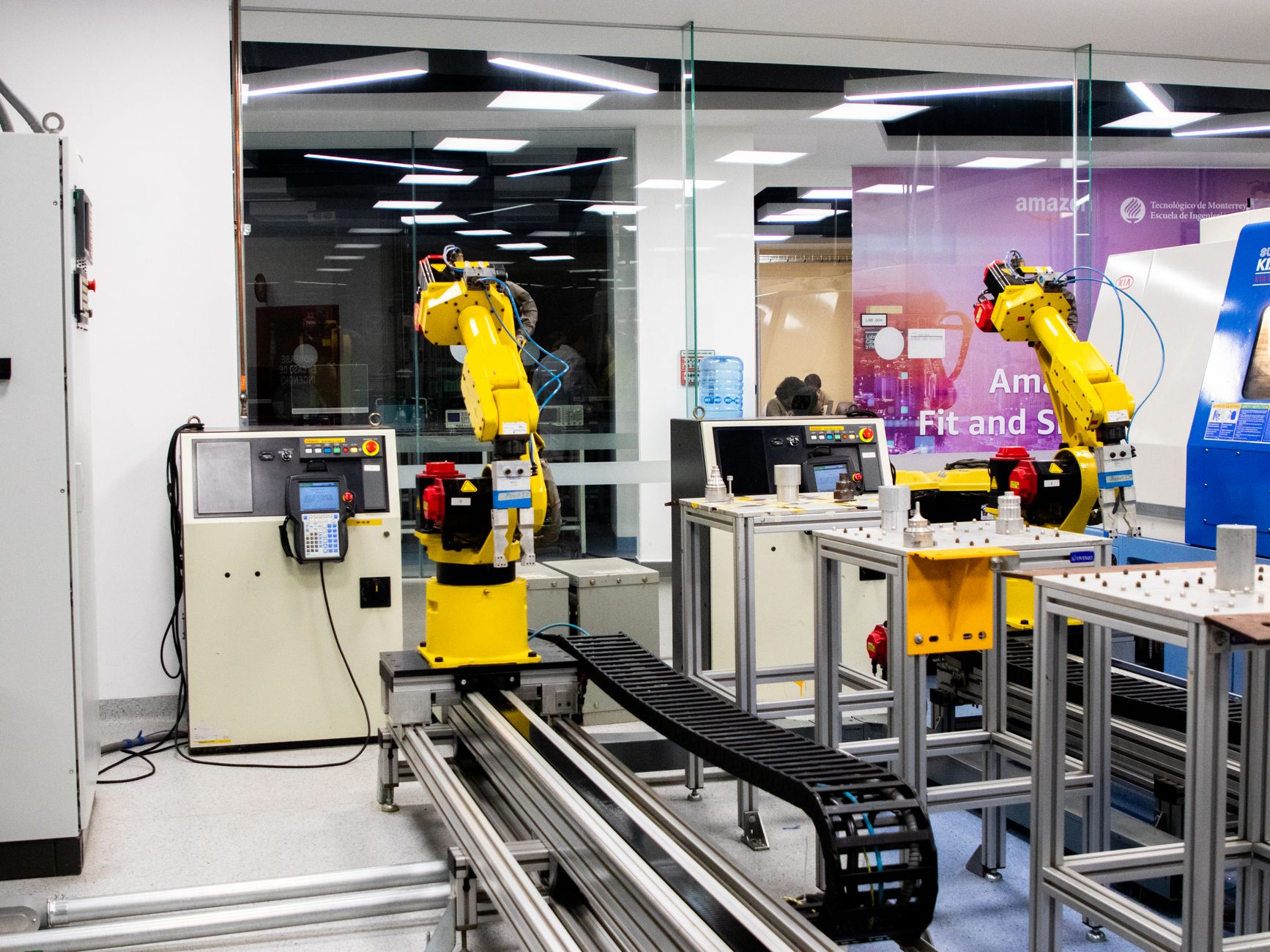
The new equipment reportedly includes industrial robot arms made by FANUC, one of the most recognized names in factory robotics. These systems are commonly used for repetitive, high-precision assembly tasks that require consistent movement, exact positioning, and nonstop operation across long production shifts.
In an EV plant, robots can be especially useful for:
- Positioning and fastening vehicle components
- Handling heavy or awkward parts safely
- Improving repeatability during assembly
- Reducing cycle times on critical production steps
- Supporting quality control through integrated sensors
That does not automatically mean robots are replacing every worker they stand beside. In many factories, automation changes task distribution rather than eliminating entire roles overnight. A robotic arm may take over a repetitive fastening job, while human workers shift to inspection, troubleshooting, maintenance, coordination, or exception handling.
Still, context matters. When more than a thousand union workers are waiting to be called back, any new machine installation can feel less like a productivity upgrade and more like a warning about what management thinks the future should look like.
Why the union response is so strong
The reaction from the United Auto Workers has been pointed because this dispute is not only about technology. It is also about expectations.
Workers affected by what had been framed as temporary layoffs expected a path back. When that return does not happen, and the factory instead brings in new robotics, the issue quickly becomes about credibility. Were layoffs truly temporary? Will future hiring be reduced permanently? Are workers being asked to absorb the uncertainty while the company restructures production around fewer people?
The official position of the United Auto Workers reflects a broader concern across manufacturing: automation is easier to accept when it is paired with retraining, wage protection, and transparent staffing plans. It becomes much harder to accept when people see machines arriving before displaced employees are recalled.
Trust is often the real fault line
Many labor disputes that look like fights over automation are, at their core, fights over trust. Workers know factories have been automated for decades. Robotic welding, painting, and material handling are not new. What changes the emotional temperature is whether workers believe they are part of the transition or simply casualties of it.
If management presents robotics as a tool for safety, quality, and long-term competitiveness while also creating credible pathways into higher-skill roles, resistance can soften. If workers see automation as a one-way route to fewer jobs and weaker bargaining power, backlash becomes almost inevitable.
Why EV manufacturing is accelerating automation
Electric vehicle production is creating a fresh incentive for automakers to redesign how assembly works. EVs do not simply swap one engine type for another. They change the architecture of the vehicle, the supply chain, the software stack, and the economics of the factory floor.
Battery systems, thermal management, power electronics, lightweight materials, and digital control systems all introduce new assembly requirements. Some tasks become simpler than those found in combustion-engine manufacturing, while others become more exacting and process-sensitive.
Robots fit the EV factory for several reasons
- Precision: Battery-related components and electrical systems often demand tighter tolerance control.
- Safety: Heavy packs, high-voltage systems, and repetitive lifting can create risk for human workers.
- Scalability: Automakers want the ability to standardize processes across multiple plants and models.
- Data visibility: Connected robots can feed performance data into quality and production systems in real time.
- Cost pressure: EV profit margins remain a major industry challenge, pushing manufacturers to look for efficiency gains everywhere.
That combination helps explain why companies are investing in automation even when demand forecasts are uncertain. Robotics can be part of a long-term bet that production needs to become more flexible, more measurable, and less dependent on labor-intensive steps.
GM’s own Factory ZERO initiative has been marketed as a major pillar of its EV strategy, making any production change there especially visible.
What robots do well, and where people still matter most
Public debates about automation often slip into extremes. Either robots are portrayed as unstoppable job destroyers, or they are described as harmless tools that simply help people work better. Reality is more complicated.
Robots are exceptionally good at repetitive, controlled, physically demanding tasks. They do not get tired in the same way humans do, and they can reproduce the same motion thousands of times with little variation. In a high-volume production setting, that consistency is valuable.
Humans still matter most where judgment, adaptation, and contextual decision-making are required. Factory work today includes much more than manual assembly. It involves diagnosing irregularities, resolving line disruptions, calibrating equipment, coordinating across teams, improving workflows, and responding to problems that were never fully anticipated by the system.
The strongest factories combine both
The best modern plants are not simply automated plants. They are well-orchestrated human-machine environments. In those facilities, robotics handles precision repetition, while skilled workers manage variation, oversight, optimization, and recovery.
That is why the real workforce question is not whether humans disappear from manufacturing. It is which jobs decline, which jobs evolve, and whether workers are given a fair chance to move into the growing roles instead of being left behind during the transition.
The future of auto jobs is becoming more technical
As factories become more automated, the profile of in-demand manufacturing talent changes. There is still room for hands-on production experience, but there is rising demand for people who can work across mechanical systems, software tools, sensors, industrial networks, and data-driven operations.
Roles connected to automation growth increasingly include:
- Robot technicians and automation specialists
- PLC programmers and controls engineers
- Industrial maintenance professionals
- Quality systems analysts
- Manufacturing data engineers
- Cybersecurity professionals for connected factories
- Cloud and edge infrastructure specialists for industrial systems
For students and career changers, this is where the conversation becomes practical. The factory floor is no longer separate from digital skills. Manufacturing now overlaps with AI, embedded systems, analytics, cloud platforms, and software-supported decision-making.
That is one reason learners exploring technical pathways may benefit from hands-on programs related to AI and machine learning internships or cloud computing and DevOps internships. Industrial automation increasingly depends on exactly these kinds of capabilities, especially as equipment becomes more connected and production data becomes central to planning.
Skills that are becoming more valuable
- Understanding sensors, actuators, and control logic
- Working with manufacturing dashboards and data systems
- Basic scripting or automation workflow knowledge
- Troubleshooting connected devices and industrial software
- Familiarity with safety systems and industrial compliance
- Cross-functional communication between engineering and operations teams
Students who want broader exposure can also explore internship opportunities across technical domains that mirror the hybrid skill sets modern factories increasingly require.
Could automation and job security coexist?
They can, but not automatically.
There are ways companies can introduce robotics without turning every upgrade into a labor conflict. The challenge is that these approaches require planning, investment, and a willingness to share long-term gains instead of simply using automation to cut headcount.
What a more balanced transition could look like
- Advance notice: Workers should understand which tasks are changing and why.
- Retraining guarantees: Employees affected by automation need realistic pathways into maintenance, programming, inspection, or adjacent roles.
- Recall transparency: If layoffs are temporary, timelines and conditions should be communicated clearly.
- Joint planning: Labor and management can collaborate on how technology is introduced.
- Productivity sharing: If automation boosts output and margins, workers should see some benefit through wages, stability, or advancement.
These ideas are not abstract. They are quickly becoming central to industrial policy and labor strategy across the EV sector. Governments want advanced manufacturing jobs. Companies want competitive plants. Workers want security in the face of rapid change. None of those goals are impossible to align, but alignment does not happen by accident.
What to watch next across GM and the wider EV industry
The next phase of this story will likely depend on several moving parts at once. Demand for electric vehicles remains uneven. Battery costs and supply chains continue to shape production economics. Interest rates, pricing competition, and government incentives all affect how aggressively automakers invest in capacity and equipment.
At the same time, robotics will keep spreading. Not because companies are unusually eager to create controversy, but because precision automation is now deeply tied to how next-generation manufacturing is being designed. The key question is whether companies can make that transition in a way that preserves trust and develops people alongside machines.
For readers outside the auto sector, the lesson is broader than GM. Similar decisions are appearing in warehouses, chip plants, hospitals, and logistics networks. Businesses want resilience, speed, and measurable efficiency. Workers want a future that includes them. Education providers are being pushed to prepare learners for careers that combine technical fluency with adaptability.
The next industrial bargain is still being negotiated
GM’s robot installation at Factory Zero is not just a Detroit labor story or a single-company manufacturing update. It is a visible chapter in a much bigger negotiation over what modern work should look like in an age of electric vehicles, automation, and intelligent systems.
Robots will almost certainly keep expanding across the factory floor. The more important question is whether the people who built the industry will have a real place in the version that comes next. Companies that answer that question well will not only build better factories. They will build more durable public trust, stronger talent pipelines, and a workforce that sees technology as a bridge to opportunity rather than a signal of exclusion.
#evmanufacturing #automation #robotics #autoworkers #electricvehicles #futureofwork