
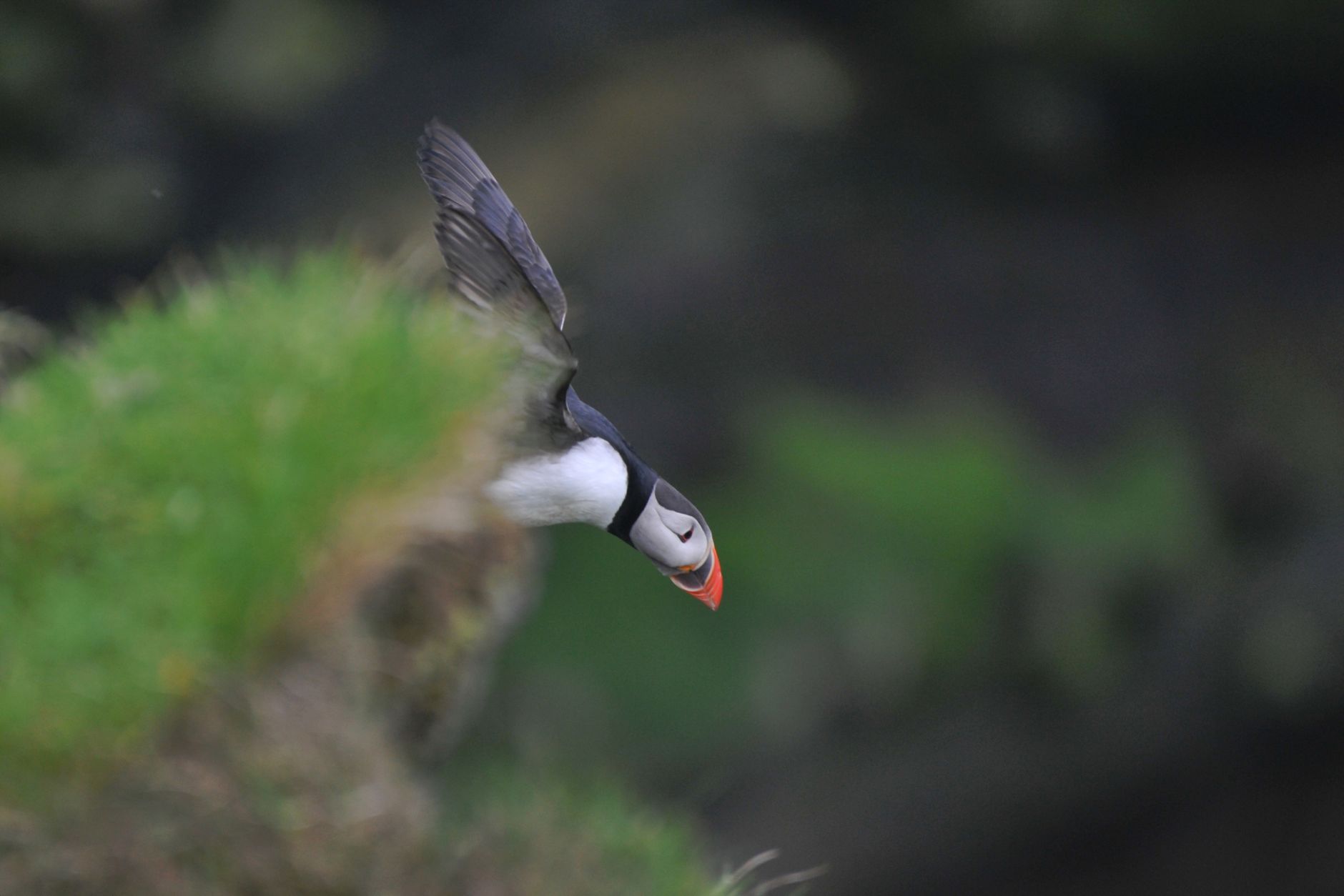
Excerpt: Engineers at MIT and EPFL have built a bird-inspired robot that can swim underwater and fly into the air, opening new possibilities for marine research, environmental monitoring, and low-cost data collection. #robotics #drones #oceanscience #biomimetics #engineering #innovation
Some of the most interesting advances in robotics happen when engineers stop trying to invent from scratch and start paying closer attention to nature. Seabirds are a perfect example. Puffins, gulls, and other diving birds move between air and water with remarkable ease, despite the fact that those environments demand completely different forms of motion. Now, researchers at MIT and EPFL in Lausanne have developed a lightweight robot inspired by that same biological talent: a flapping-wing vehicle that can fly, dive, swim, and then launch itself back into the air.
That achievement may sound playful at first glance, but its potential is serious. A robot that can cross the boundary between sky and sea could become a powerful tool for oceanographers, marine biologists, coastal researchers, and environmental monitoring teams. Instead of relying only on boats, floating sensors, or traditional drones, scientists may soon be able to use compact aerial-aquatic robots to collect samples and measurements in places that are difficult, risky, or expensive to reach.
Why moving through air and water is so difficult
Air and water may seem like ordinary surroundings for birds and fish, but from an engineering perspective they are radically different. Water is far denser than air, which means any machine moving through it must deal with much higher resistance. Wings that work beautifully in the sky can become inefficient or unstable underwater. Likewise, structures built for swimming often do not produce the lift needed for flight.
This is what makes diving birds such a fascinating model for robotics. Their bodies and wing motions allow them to operate in both mediums, shifting from aerial lift to underwater propulsion without switching to an entirely different set of tools. Engineers have long admired that efficiency, but recreating it in a robot has been a major challenge.
The new flapping-wing aerial-aquatic vehicle, or FAAV, shows that it is possible to bridge that gap with smart mechanical design. Rather than separating swimming and flying into two independent systems, the robot uses the same overall wing-based concept to function in both environments.
A closer look at the robot’s design
The robot itself is compact, weighing under 300 grams. Its body includes a central fuselage, two flexible wings, and a motorized tail that helps control pitch during transitions. Inside the fuselage, a waterproof electric motor drives a crankshaft that flaps the wings at specific frequencies. That mechanical simplicity is one of the most compelling parts of the design: the robot does not need a large, complex propulsion setup to alternate between water and air.
The wings are especially important. They are built with thin membranes and coated with hydrophobic nanoparticles, which help repel water and reduce the amount of moisture that remains on the surface after emerging from a dive. That matters because water sticking to the wings can add weight, change airflow, and make takeoff more difficult.
The tail also plays a bigger role than it might seem. By adjusting its angle, the robot can alter its orientation to climb out of water or descend into it more effectively. In real-world robotics, transitions are often harder than steady-state movement. Flying is one challenge, swimming is another, but moving cleanly between the two can be the hardest problem of all. The steerable tail helps solve that transition problem.
What the experiments revealed
To understand how the robot performed, the researchers tested it in a water tank and at Lake Geneva. Those trials were focused on one central question: what combinations of wing size, flapping frequency, and tail angle would let the vehicle move smoothly from underwater travel to airborne flight?
The answer was not simply