
AI companies must prove they can scale responsibly, utilities are modernizing the grid for rising data-center demand, and biotech is chasing exercise-mimicking therapies. Together, these shifts reveal where technology is headed next. #ai #anthropic #powergrid #biotech #healthtech
Some technology news cycles are easy to file into neat categories: artificial intelligence, energy, health, startups, research. This one is different. The biggest developments sit in separate industries, but they all point to the same reality: breakthrough technology is now colliding with practical limits.
Anthropic’s IPO filing raises hard questions about how AI companies want to be seen and how they actually operate. New interest in solid-state transformers shows that the AI boom is not just a software story; it is also an electricity story. And the latest work on exercise-mimicking medicines reminds us that some of the most ambitious innovations are no longer about replacing humans, but about helping people function better.
Put those threads together and a clearer picture emerges. The next phase of innovation will depend less on hype alone and more on credibility, infrastructure, and measurable public value.
The Anthropic IPO is bigger than a stock market milestone
Anthropic’s public filing is being treated as one of the defining AI business events of the year, and for good reason. The company has become one of the most closely watched names in generative AI, partly because of its model capabilities and partly because of the story it has told about itself.
For years, Anthropic has occupied a carefully balanced position in the AI ecosystem. It has presented itself as a lab deeply focused on safety and alignment, while also competing in a market where capital intensity, computing scale, and product velocity can be unforgiving. That tension is now impossible to ignore.
A company with multiple identities
The most fascinating part of the IPO process is not just the revenue, the losses, or the valuation speculation. It is the narrative conflict. Is Anthropic primarily an AI safety company? Is it a high-growth commercial rival to OpenAI and Google? Or is it ultimately pursuing frontier systems that may become vastly more capable than anything in use today?
The answer appears to be all three at once. That is what makes the filing so significant. Public markets tend to reward clarity, but frontier AI companies often run on strategic ambiguity. They need to reassure regulators, inspire enterprise customers, attract researchers, and justify enormous infrastructure spending at the same time.
Readers who want to understand the company’s public stance can also follow updates directly from Anthropic, which has increasingly framed responsible AI as central to its long-term identity.
Why investors and developers are paying attention
An IPO prospectus does more than prepare a company for listing. It forces a level of disclosure that private storytelling often avoids. Risks must be stated. Governance structures must be explained. Dependence on infrastructure, partners, and capital becomes visible in ways marketing pages never reveal.
For AI companies, those disclosures matter even more because the economics of the field remain unusual. Training and serving advanced models can require extraordinary compute budgets, access to specialized chips, long-term cloud partnerships, and top-tier research talent. Revenue can rise fast, but costs can scale just as aggressively.
That makes Anthropic’s filing important beyond Wall Street. It is also a reality check for students, founders, and engineers who have watched generative AI explode in public attention. Building serious AI systems is not just about prompts and demos. It is about:
- capital-intensive infrastructure
- model safety and evaluation
- enterprise trust and compliance
- governance under public scrutiny
- competition for compute and talent
For aspiring professionals, this is where AI careers become more nuanced. The field now needs not only model researchers, but also policy specialists, security engineers, data practitioners, infrastructure teams, and product operators. Those exploring hands-on experience in the space can benefit from structured opportunities in AI and machine learning internships, where technical work increasingly intersects with real deployment constraints.
The safety question is no longer separate from the business question
One of the most striking aspects of the current AI market is that safety is no longer a side conversation. It is becoming part of the business model. Customers want to know whether a model is reliable, governable, and appropriate for sensitive use cases. Governments want to know whether leading labs are prepared for misuse, systemic risk, and rapid capability advances.
That puts companies like Anthropic in a difficult but revealing position. The more they emphasize safety, the more they invite scrutiny when internal processes fall short. The more they emphasize speed and scale, the more critics question whether caution can survive commercial pressure.
In that sense, the IPO matters because it captures a wider transformation in the AI industry: narrative alone is no longer enough. Public trust must be supported by operational evidence.
The AI boom also runs on steel, silicon, and electricity
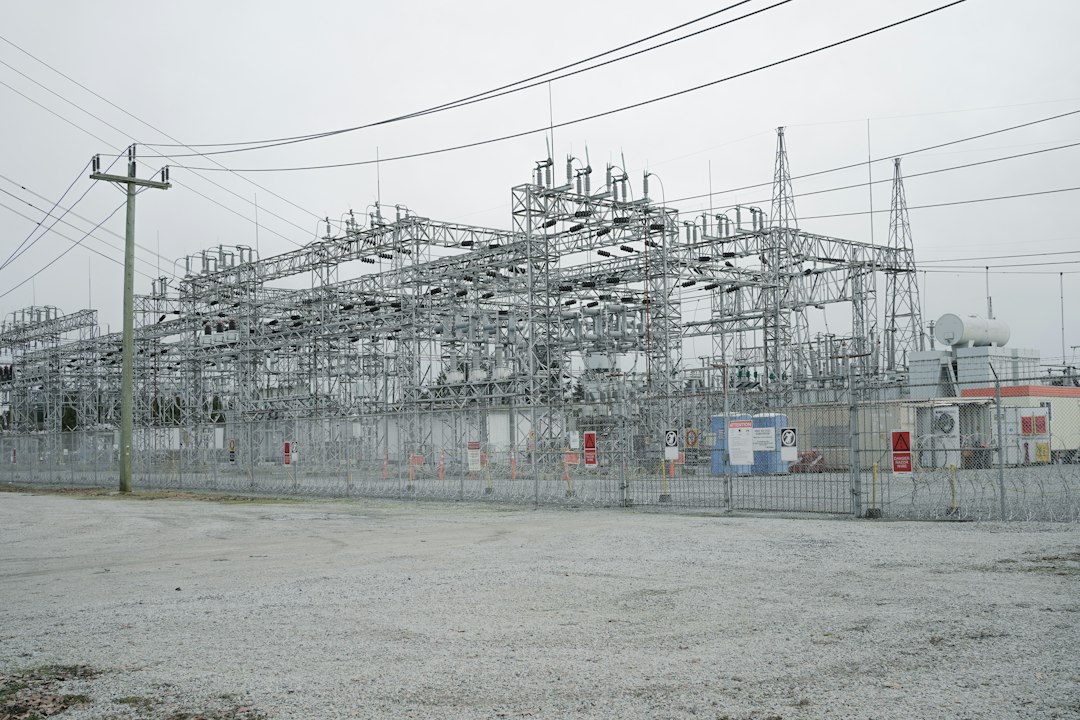
If the Anthropic story highlights trust, the power-grid story highlights physics. AI may feel weightless when people interact with chatbots or cloud applications, but the systems behind those experiences are anything but intangible. They depend on energy-hungry data centers, cooling systems, chip manufacturing, and an electrical grid that was not built for today’s load patterns.
That is where transformers enter the conversation.
Why transformers suddenly matter to the digital economy
Transformers are foundational to electric power systems. They help convert voltage so electricity can be transmitted efficiently over long distances and then delivered safely for industrial, commercial, and residential use. Most people never think about them, yet without them, modern computing infrastructure would not function.
As electricity demand rises from AI data centers, electric vehicles, advanced manufacturing, and electrified buildings, transformers have moved from background hardware to a strategic bottleneck. They are difficult to manufacture, often slow to replace, and critical to grid reliability.
Utilities, grid planners, and technology companies are now facing the same uncomfortable truth: digital growth depends on physical systems that can take years to expand.
What solid-state transformers could change
Solid-state transformers are being explored as a smarter, more flexible alternative to conventional transformer designs. While the technology is still developing, the potential advantages are attracting serious attention.
- They can enable faster and more precise power control.
- They may improve efficiency and reduce some transmission losses.
- They can better support distributed energy resources such as solar and battery systems.
- They may help integrate variable energy loads more effectively.
- They align with the broader shift toward digitally managed energy networks.
For an economy leaning harder on cloud computing and AI inference, those benefits are not abstract. They touch reliability, expansion speed, energy costs, and long-term sustainability.
The modernization challenge is now a national and industrial priority. The US Department of Energy’s grid efforts show how seriously policymakers and infrastructure planners are treating transmission, resilience, and grid deployment.
Why this matters for the AI buildout
There is a tendency to describe AI progress as if it were primarily a model race. In reality, it is becoming an infrastructure race. The winners will not only be the firms with the best algorithms, but also those with access to reliable compute, efficient facilities, and stable energy supply.
That has several downstream implications.
First, location strategy will matter more. Regions with better grid capacity, faster permitting, and lower power constraints may become more attractive for new data-center investments. Second, energy management will become a competitive skill, not just an operational detail. Third, software professionals will increasingly need to understand the infrastructure context in which their applications run.
This is one reason cloud and systems knowledge is gaining new relevance. Students interested in the operational side of modern technology stacks may find value in learning through cloud computing and DevOps internships, where availability, scaling, deployment, and cost efficiency are no longer separate from broader discussions about AI growth.
The hidden lesson: old systems shape new revolutions
One of the most useful ways to read the transformer story is as a reminder that innovation rarely moves at the speed of software alone. Entire industries can be held back by components the public barely notices. In this case, the future of advanced computing may partly depend on whether grid hardware evolves fast enough to keep up.
That does not make the story less exciting. It makes it more real. The next generation of technical breakthroughs will be constrained, and therefore defined, by supply chains, transmission capacity, materials, and deployment timelines.
The search for an exercise pill reflects a different kind of ambition
Compared with IPO filings and grid modernization, the idea of an exercise pill sounds almost futuristic in a different way. But the scientific goal is grounded in a practical and compassionate question: can medicine reproduce some of the biological benefits of exercise for people who cannot easily exercise enough on their own?
This is not simply about convenience. It is about aging, recovery, disability, metabolic disease, and quality of life.
What researchers are really trying to mimic
Exercise triggers a network of effects across the body. It influences muscles, bones, the cardiovascular system, blood sugar regulation, inflammation, brain health, and mood. That complexity is exactly why the field is both promising and difficult.
Scientists are not trying to bottle movement in a literal sense. They are studying the biochemical signals and pathways that physical activity activates, then looking for ways to reproduce selected benefits with drugs or therapeutic compounds.
That distinction matters. A medicine might mimic one or two pathways linked to endurance, metabolism, or muscle preservation. It is far harder to recreate the full-body benefits of regular physical activity, especially the mechanical, neurological, and psychological effects.
Where exercise-mimicking therapies could help most
The most compelling use cases are not about replacing healthy habits for the general population. They are about supporting people whose bodies face serious constraints.
- Older adults dealing with frailty or muscle loss
- Patients recovering from injury or surgery
- People with chronic illness that limits mobility
- Individuals facing severe fatigue from medical treatment
- Patients at risk of metabolic complications from inactivity
Seen this way, the research is less about a shortcut and more about extending the benefits of modern medicine to people who need functional support the most.
Anyone looking for a grounded overview of why physical activity remains so important can refer to resources from the National Institutes of Health, which make clear that exercise affects far more than weight or fitness alone.
Why experts remain cautious
The phrase exercise pill is catchy, but it can easily oversimplify the science. A pill may eventually help preserve muscle function, improve glucose handling, or activate pathways associated with endurance. That would still be valuable. But it would not automatically replicate everything from bone loading to coordination to the mental-health effects of sustained movement.
There are also safety, targeting, and long-term efficacy questions. If a drug activates exercise-related pathways too strongly or in the wrong tissues, the results may not be desirable. As with many promising biomedical ideas, the gap between mechanistic insight and safe real-world therapy can be large.
Still, the field is worth watching because it reflects a broader trend in health technology: precision interventions that do not aim to replace human behavior entirely, but to support people where biology, age, or illness create real barriers.
What connects these stories more than it first appears
Anthropic’s IPO, solid-state transformers, and exercise-mimicking drugs may sound like unrelated headlines, but they are all examples of technology maturing under pressure.
Each story reveals a different bottleneck:
- AI faces a trust bottleneck. Advanced systems need credible governance, not just bigger models.
- Digital growth faces an infrastructure bottleneck. Software expansion ultimately depends on hardware, power, and grid resilience.
- Biotech faces a complexity bottleneck. Human physiology does not yield easily to simple one-to-one replacements.
That pattern is increasingly common across the innovation economy. The easy phase is proving something is possible. The harder phase is making it reliable, scalable, safe, and broadly useful.
Why this matters for students, builders, and early-career professionals
If you are entering technology, research, or digital business today, the lesson is not to specialize less. It is to understand context better.
The future belongs to people who can work across layers. In AI, that means linking model capability with policy, security, and infrastructure. In energy, it means understanding how software systems interact with physical networks. In health innovation, it means appreciating both molecular science and patient realities.
This is also a good moment to rethink where opportunity lives. Some of the most important careers in the next decade may not sit only in consumer apps or startup hype cycles. They may emerge in power systems, deployment engineering, AI operations, medical technology, and the practical interfaces between research and implementation.
For learners still exploring their direction, broader pathways such as internship programs across technology domains can be a useful way to test interests while building real-world experience.
That may be the clearest takeaway from this moment in tech: the most consequential innovations are no longer just about invention. They are about whether bold ideas can survive contact with markets, infrastructure, regulation, and the human body itself. The next breakthroughs will not be defined by ambition alone, but by how well that ambition is translated into systems people can actually trust, power, and use.
#ai #anthropic #powergrid #biotech #healthtech