
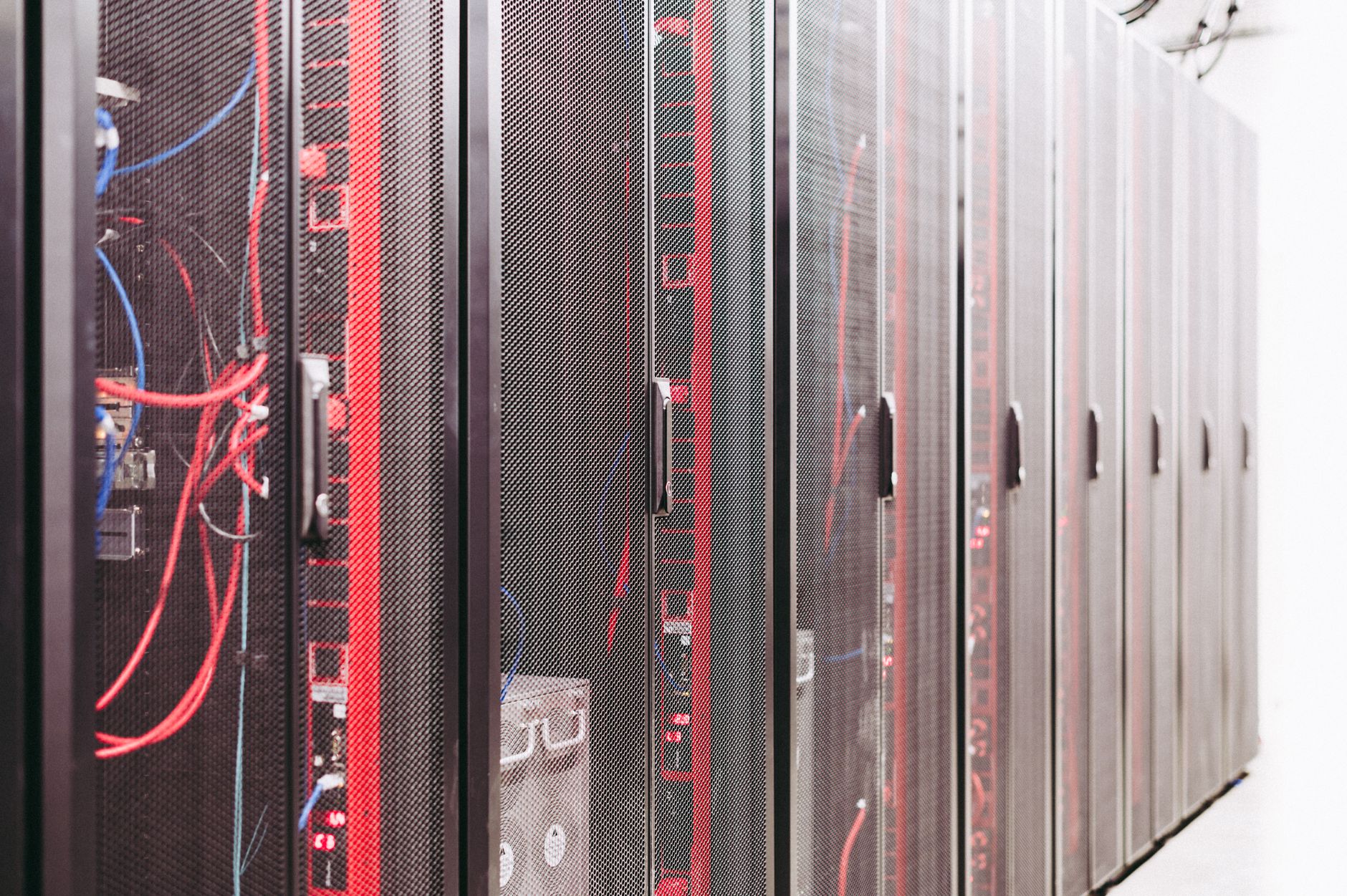
AI policy and data center growth are colliding around safety, power, and public trust. As federal regulation gains momentum, the industry also faces mounting scrutiny over electricity use and infrastructure strain. #ai #dataCenters #airegulation #electricitygrid #cloudcomputing #techpolicy
The next phase of the AI boom will not be shaped by model performance alone. It will be shaped by lawmakers, electric grids, utility planners, and communities deciding how much infrastructure they are willing to support—and under what rules.
That shift is becoming clearer on two fronts. On one side, a new generation of policymakers is pushing for stronger AI oversight as advanced systems become more capable, less predictable, and more deeply embedded in public life. On the other, the physical backbone of AI—massive data centers packed with power-hungry chips—is running into a harder constraint than many tech companies expected: electricity.
Together, these trends tell an important story. AI is no longer just a software conversation. It is now a governance issue, an energy issue, and a public-interest issue. For students, developers, startup founders, and digital professionals, understanding that broader picture is becoming essential.
A new political moment for AI regulation
The rise of stronger AI oversight in the United States has often felt uneven. Washington has spent years debating whether to regulate artificial intelligence through existing laws, sector-specific rules, or entirely new frameworks. Progress has been slow, in part because lawmakers have struggled to balance innovation with risk.
Now that debate is becoming more urgent.
One reason is the arrival of policymakers who are making AI risk a central issue rather than a niche technology concern. Scott Wiener, who won the congressional seat long held by Nancy Pelosi in San Francisco, represents that shift. At the state level, he built a reputation for engaging seriously with advanced AI governance, especially around risks that go beyond familiar concerns like bias or plagiarism.
His position matters not just because of his district’s location near the center of the tech industry, but because it reflects a growing willingness among elected officials to talk openly about worst-case scenarios as well as everyday harms. That includes fears around autonomous cyberattacks, misuse of frontier models, loss of human oversight, and the possibility that rapidly improving systems could outpace the institutions meant to control them.
This is no longer only a Silicon Valley ethics discussion. It is becoming a legislative one.
Why the tone of the debate is changing
Early public conversations about AI often focused on convenience: chatbots, productivity tools, automated search, and coding assistants. Those use cases still matter, but the mood has changed as models have become more powerful and more widely deployed.
Several concerns are now driving policy pressure:
- Safety and reliability: Can high-impact systems be trusted in healthcare, finance, education, defense, and public services?
- Security: Could advanced models help bad actors automate phishing, malware development, or infrastructure attacks?
- Transparency: Do users know when they are interacting with AI, and do regulators know how powerful systems are trained and tested?
- Accountability: When AI causes harm, who is responsible—the developer, deployer, or operator?
- Concentration of power: Are a small number of companies gaining too much influence over the digital economy through access to compute, chips, and proprietary models?
These questions help explain why lawmakers are becoming less comfortable with a hands-off approach. In practice, the argument is not usually about stopping AI altogether. It is about deciding what guardrails are necessary before systems become too deeply integrated to easily control.
What federal AI policy may look like
The United States is unlikely to adopt a single sweeping AI law overnight. A more realistic path is a layered policy environment made up of agency guidance, procurement standards, reporting requirements, and targeted legislation.
That means the future of AI regulation may include:
- Mandatory safety testing for highly capable models
- Disclosure requirements for frontier model developers
- Rules for AI use in critical infrastructure and government systems
- Liability standards for harmful or deceptive deployments
- Export controls and national security measures tied to advanced chips
- Watermarking or provenance standards for synthetic media
Much of this work is already being informed by existing frameworks such as the NIST AI Risk Management Framework, which has become a key reference point for responsible development and deployment. While not a law, it offers a practical structure for thinking about governance, measurement, and oversight.
For companies, this means regulation is no longer a distant possibility to be monitored by legal teams. It is becoming part of product strategy. The organizations that adapt early—by investing in documentation, red-teaming, evaluation, and governance—will likely be in a stronger position than those that treat compliance as an afterthought.
Why students and early-career professionals should care
If you are studying computer science, data science, public policy, or cybersecurity, AI regulation is now directly relevant to your career. Employers increasingly want people who can work across technical performance and responsible deployment.
That is especially true in roles related to model operations, trust and safety, AI evaluation, governance, compliance, and secure deployment. Learners exploring practical pathways into this space often benefit from hands-on exposure in areas like AI and machine learning internships, where the technical side of building systems can be paired with an understanding of real-world constraints.
In other words, knowing how to train or integrate AI is useful. Knowing how to do it safely, legally, and at scale is quickly becoming even more valuable.
The hidden physical cost of the AI boom
While policymakers debate AI risk, another pressure point is becoming impossible to ignore: the huge amount of electricity required to power modern data centers.
AI may feel weightless when accessed through a browser or app, but the systems behind it are profoundly physical. Training and serving large models depends on specialized chips, cooling systems, network hardware, and enormous facilities operating around the clock. Each new wave of AI adoption increases demand for compute, and compute demand translates into power demand.
That is why data center expansion has become one of the most important infrastructure stories in tech.
Communities that host major data center clusters are now confronting a difficult tradeoff. These facilities can bring tax revenue, construction jobs, and strategic investment. But they can also raise local concerns around land use, water consumption, noise, visual impact, and especially electricity.
Nowhere is that tension more visible than in large data center corridors such as Northern Virginia, where digital infrastructure has expanded at extraordinary speed.
Why electricity is becoming the real battleground
Public debate around data centers is sometimes framed as a clash between progress and resistance. But that oversimplifies what many communities are actually worried about.
The deeper issue is often not whether technology should advance, but who absorbs the cost of that growth.
Electricity sits at the center of that concern. When a new data center requires major grid upgrades, draws heavily from regional power supplies, or contributes to higher system stress, residents and policymakers start asking practical questions:
- Will this raise power prices for households and small businesses?
- Can the local grid handle future demand without sacrificing reliability?
- Will utilities rely more heavily on fossil fuel generation to keep up?
- Who pays for transmission, substations, and backup infrastructure?
- What happens when AI demand keeps growing faster than permitting and energy planning?
These are not abstract objections. They are infrastructure questions with political consequences.
According to the International Energy Agency, electricity demand from digital infrastructure is expected to rise significantly as AI workloads scale. That puts pressure on utilities, regulators, and hyperscale cloud providers to rethink how expansion happens.
Why data center growth is no longer just a cloud story
For years, cloud computing was sold primarily as a business efficiency story: more flexibility, less hardware management, faster scaling. That logic still holds. But AI has changed the economics and visibility of the cloud itself.
Large-scale generative AI requires more intensive inference workloads than many traditional enterprise applications. Unlike standard web hosting or storage, AI systems often need dense clusters of GPUs or custom accelerators, advanced cooling, and continuous high-capacity power availability.
That means future cloud growth is increasingly tied to three things:
- Energy access
- Land and permitting
- Grid modernization
For professionals entering infrastructure fields, this is opening new opportunities. Skills in automation, distributed systems, platform engineering, and energy-aware operations are becoming more relevant as cloud environments scale under tougher constraints. That is one reason demand remains strong for pathways such as cloud computing and DevOps training, where learners can build experience in the systems that support modern AI services.
Onsite generation versus grid dependence
One of the most contentious questions is how data centers should source their electricity. Some facilities pull almost entirely from the grid. Others are exploring or investing in onsite generation, long-term energy contracts, battery systems, or dedicated renewable projects.
Neither route is frictionless.
Heavy grid dependence can intensify concerns about public infrastructure strain. Onsite generation, meanwhile, can trigger separate backlash if it involves diesel backups, gas turbines, or local emissions. Even cleaner options raise questions around land use, transmission bottlenecks, and whether companies are truly adding new capacity or simply competing for already-limited clean energy resources.
This is why the politics of data centers are becoming more complicated. A better public image alone will not solve the underlying math of power consumption.
Where AI policy and energy policy intersect
The most interesting part of this story is that AI regulation and data center power debates are no longer separate conversations. They are beginning to merge.
If governments decide that advanced AI systems require stricter testing, monitoring, and accountability, companies may face slower deployment cycles and more operational scrutiny. If communities and regulators push back on power-hungry data center growth, compute capacity may also become harder or more expensive to expand.
That creates a new reality for the AI sector: technical ambition must now coexist with political legitimacy and infrastructure realism.
This intersection could shape several major outcomes:
- More selective AI deployment: Businesses may prioritize high-value use cases over broad, unfocused rollouts.
- Greater emphasis on model efficiency: Smaller, optimized, or domain-specific models may become more attractive.
- Stronger regional planning: States and municipalities may demand clearer benefits in exchange for hosting digital infrastructure.
- New compliance roles: Companies will need professionals who understand both operational systems and regulatory expectations.
- Increased public scrutiny: Communities will want more transparency about the social and environmental cost of AI expansion.
For learners interested in secure and responsible systems, this broader landscape also overlaps with cyber risk. As critical digital infrastructure grows, so does the need for resilience, monitoring, and threat defense—areas where exposure to cyber security and ethical hacking roles can be especially relevant.
What the industry can do next
Tech companies often argue that overregulation could slow innovation or weaken national competitiveness. There is some truth to that concern, especially in a global race for talent, chips, and platform leadership. But public resistance is not eased by insisting that growth is inevitable.
A more durable approach would include a few clear shifts.
1. Build for efficiency, not just scale
There is growing room for companies that can deliver useful AI with less compute. Model compression, efficient inference, smarter scheduling, and better hardware utilization are becoming strategic advantages, not side optimizations.
2. Treat transparency as infrastructure
Whether the topic is model safety or electricity sourcing, trust depends on disclosure. Communities, regulators, customers, and investors increasingly expect evidence—not just promises.
3. Work earlier with local stakeholders
Data center projects often generate the most backlash when residents feel that decisions were made without meaningful consultation. Earlier engagement can surface legitimate concerns before they turn into political opposition.
4. Align AI growth with energy planning
Utilities and cloud providers need more coordinated forecasting. If demand from AI infrastructure keeps rising, reactive planning will not be enough. Transmission, generation, storage, and permitting all need longer timelines than software roadmaps typically allow.
5. Prepare for governance as a core function
AI governance should not live only in policy documents. It needs to be reflected in product design, procurement, security reviews, deployment decisions, and executive accountability.
What this means for the next generation of tech talent
One of the clearest messages from this moment is that the future of technology careers is becoming more interdisciplinary. The strongest professionals will not only understand how systems work, but also how those systems affect institutions, resources, and communities.
That matters across roles:
- Developers need to think about safety, transparency, and compute costs.
- Data scientists need to understand governance, evaluation, and efficiency.
- Cloud engineers need to design with power, scale, and resilience in mind.
- Policy students need enough technical fluency to shape workable rules.
- Cybersecurity professionals need to anticipate how AI changes the threat landscape.
For students and graduates exploring the field, this is also a reminder that practical experience matters. Structured pathways such as technology internships across AI, cloud, and data roles can help bridge the gap between theory and the operational realities shaping the industry.
Anyone entering tech today is stepping into a world where innovation is no longer judged only by what can be built. It is also judged by what can be governed, powered, secured, and sustained.
A more grounded view of the AI future
There is still enormous momentum behind artificial intelligence, and much of it is justified. AI tools are improving research workflows, software development, customer support, accessibility, and knowledge discovery. But the next chapter of growth will look different from the last one.
The easy story was that AI would move fast because the software was impressive. The harder, more realistic story is that AI will move at the speed of institutions and infrastructure too. Lawmakers are asking tougher questions. Communities are watching energy demand more closely. Utilities are confronting new planning pressures. And the companies building the future of AI are learning that compute is not infinite, public patience is not guaranteed, and legitimacy has to be earned.
That may ultimately be healthy for the industry. A more mature AI ecosystem will depend not only on breakthroughs in models and chips, but on the willingness to face physical limits and social responsibilities without pretending they are someone else’s problem.
#ai #dataCenters #airegulation #electricitygrid #cloudcomputing #techpolicy