
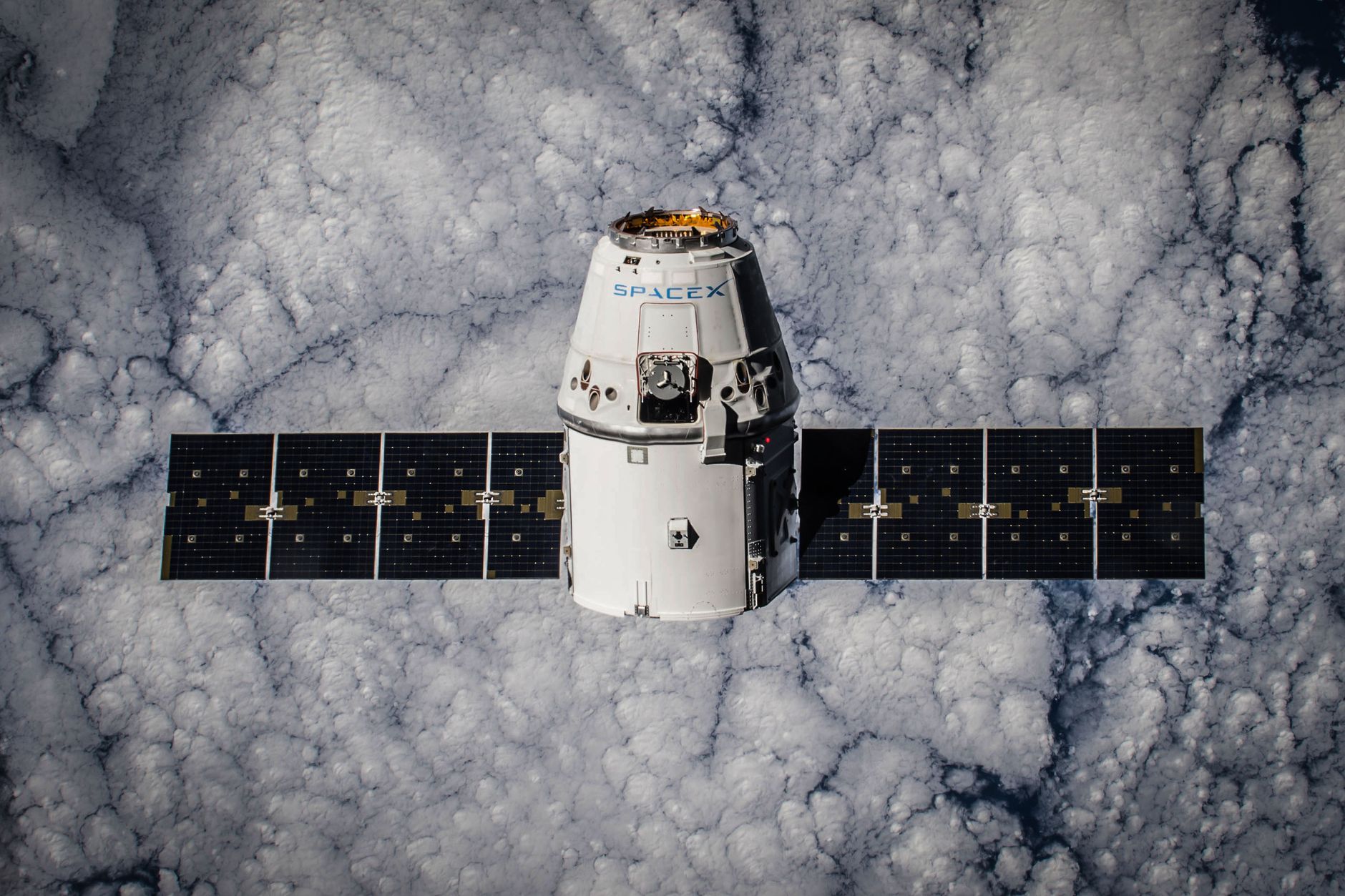
NASA’s decision to add Starliner flights signals a pivotal shift in U.S. crewed space access, giving Boeing a larger role as Dragon’s future and Atlas V’s retirement reshape mission planning. #nasa #boeing #starliner #spaceflight #commercialcrew #aerospace
NASA’s latest move to purchase two additional Boeing Starliner missions is more than a routine contract update. It is a strategic decision about the future of American human spaceflight, the stability of astronaut transportation to low-Earth orbit, and the risks of relying too heavily on a single provider during a period of major industry transition.
For years, NASA has worked to avoid the kind of access gap that once forced the agency to depend on foreign launch systems after the Space Shuttle era ended. That lesson still shapes agency thinking. Even as commercial spaceflight has matured, the need for dependable, overlapping capability remains central to every crew transportation decision NASA makes.
By extending Starliner’s role and helping Boeing prepare the spacecraft for future crewed operations beyond the retirement of Atlas V, NASA is making it clear that continuity matters just as much as innovation. In practical terms, this means supporting not only a spacecraft, but an entire launch ecosystem that can keep astronauts flying safely when today’s leading vehicles eventually age out.
NASA is planning for the next transition before the current one becomes a problem
The timing of this announcement is important. Crew Dragon has been the dependable workhorse of NASA’s Commercial Crew era, but no spacecraft remains in service forever. As SpaceX turns more of its long-term attention toward Starship and next-generation systems, NASA appears to be preparing for a future in which Dragon may not remain the agency’s default crew transportation option indefinitely.
That does not mean Dragon is disappearing tomorrow. It does mean NASA is taking a realistic view of platform life cycles. Space agencies do not wait until a critical capability is gone before finding a replacement. They secure production, certification, infrastructure, and operational confidence years in advance.
This is exactly why Starliner still matters. Even after delays, test issues, and difficult headlines, the spacecraft represents a second pathway for sending astronauts to orbit from U.S. soil. In space operations, redundancy is not a luxury. It is part of the safety architecture.
NASA has consistently emphasized that competition and overlap in commercial space systems lower risk over time. If one vehicle is grounded, delayed, or retired, another must be ready to take over. That principle helped shape the Commercial Crew Program, and it is still driving decisions today.
Why Starliner remains strategically important
Boeing’s Starliner program has had a far more difficult path than originally expected. Technical setbacks, schedule slips, uncrewed test challenges, and scrutiny around system readiness have all made the spacecraft one of the most debated projects in the commercial space sector.
Yet the strategic value of Starliner has not disappeared. If anything, it has become more obvious. NASA needs more than one viable crewed spacecraft if it wants reliable and uninterrupted access to the International Space Station and other low-Earth orbit missions.
That need becomes even sharper when the broader space industry is evolving quickly. Launch providers are retiring older rockets. New systems are entering service with their own certification timelines. Private companies are shifting investment toward more ambitious vehicles. Against that backdrop, a spacecraft that can be operational, certifiable, and adaptable becomes extremely valuable.
Boeing’s role is especially significant because Starliner was designed as part of a larger public-private model. NASA did not simply purchase seats. It helped stimulate an ecosystem in which commercial partners build and operate crew transportation services. Preserving that model requires maintaining more than one functioning participant.
The retirement of Atlas V changes the technical picture
One of the most important details in NASA’s announcement is financial support for Boeing as it works to identify a new launch vehicle after the retirement of United Launch Alliance’s Atlas V rocket. This is a critical issue, because Starliner was developed specifically around Atlas V for its crewed missions.
Atlas V has long been viewed as a reliable launcher, but its retirement means Starliner cannot simply continue business as usual. Moving a crewed spacecraft to a new rocket is not a cosmetic change. It is a major engineering and certification task involving structural loads, avionics integration, abort performance, ascent environments, software validation, and extensive safety reviews.
Any replacement rocket will need to prove that it can support crewed missions at the level NASA demands. That likely points attention toward ULA’s Vulcan Centaur, which is the company’s next-generation launch vehicle. But even a logical successor is not a drop-in swap. Crewed certification is one of the most demanding thresholds in aerospace.
For Boeing, this means the work ahead is not only about fixing past issues. It is also about future-proofing Starliner for a different launch environment. NASA’s support suggests the agency believes that effort is worth funding because the alternative, losing a potential crew transport option, would create a much larger strategic problem later.
What this says about SpaceX, Dragon, and the pace of change
NASA’s planning also reflects a basic truth about the current commercial space market: today’s dominant platform may not remain the center of operations forever. SpaceX has transformed U.S. crew transportation, but the company is also pursuing an aggressive roadmap that extends far beyond Falcon and Dragon.
If Starship becomes the centerpiece of SpaceX’s future human spaceflight strategy, older platforms may gradually move toward retirement. That would be a natural progression for a company known for rapidly iterating hardware and pushing toward larger goals.
From NASA’s perspective, however, a company’s innovation cycle cannot become a mission access risk. The agency still needs steady, certified, operational transportation for astronauts. Long-duration station missions, research rotations, and contingency planning depend on it.
That is why Boeing’s role matters even in a market where SpaceX has been highly successful. NASA is not choosing between innovation and stability. It is trying to preserve both. Dragon has delivered stability in recent years. Starliner, if fully returned to reliable service, could help extend that stability into the next transition phase.
Boeing still has something important to prove
None of this erases the challenges Boeing faces. NASA’s support is not the same as unconditional confidence. The company still has to demonstrate that Starliner can operate predictably, safely, and repeatedly in a crewed environment.
That includes resolving technical concerns with a level of transparency and rigor that satisfies both NASA engineers and the broader aerospace community. Human spaceflight is unforgiving. Small issues can cascade quickly when systems are stressed by launch, orbital operations, docking, reentry, and recovery.
Several areas will likely remain under close watch:
- Propulsion system performance and fault tolerance
- Software reliability across mission phases
- Integration with a future replacement launch vehicle
- Operational cadence and turnaround efficiency
- Cost control without sacrificing safety margins
The real test for Boeing is not whether it can generate optimism. It is whether it can build routine confidence. NASA does not need a spacecraft that works once under ideal conditions. It needs a system that can support recurring missions with a clear, defendable safety case every time.
That is a higher bar, but it is the only one that matters in crew transportation.
Why this matters beyond one spacecraft
At first glance, an additional pair of crew flights may sound like a narrow procurement story. In reality, the implications are much broader. Reliable astronaut transportation supports science on the International Space Station, keeps U.S. leadership visible in low-Earth orbit, sustains aerospace jobs, and reinforces a domestic industrial base tied to advanced manufacturing and mission-critical engineering.
It also shapes how future commercial stations, research missions, and public-private partnerships will function. If NASA and industry want a vibrant low-Earth orbit economy after the ISS era, they need mature transportation systems, not just experimental ambitions.
A healthy space ecosystem depends on more than launch spectacle. It depends on logistics, crew rotation, mission assurance, training pipelines, and long-term supplier confidence. A spacecraft that remains in service for years contributes to all of those layers.
There is also a national resilience argument. Space capabilities are increasingly tied to scientific leadership, technology competitiveness, and geopolitical credibility. When a nation can independently launch and recover astronauts using multiple systems, it signals depth, not just capacity.
A useful case study for students and future engineers
For students, graduates, and early-career technologists, the Starliner story is particularly valuable because it shows how complex modern aerospace really is. Success in this field does not depend on propulsion alone. It requires systems engineering, software validation, embedded electronics, data analysis, cybersecurity, human factors, manufacturing quality, and operations planning.
In other words, spaceflight is one of the clearest examples of interdisciplinary technology in action. A crew vehicle is not just a capsule. It is a convergence of hardware, code, communications, sensors, test data, and safety protocols.
That is why aerospace developments often matter to learners far beyond the space sector. Someone preparing for careers in embedded control systems, telemetry, simulation, or hardware-software integration can gain practical perspective from programs like this. Students interested in connected devices and mission hardware may find specialized training in IoT and embedded systems internships especially relevant to the kind of engineering seen in spacecraft development.
Likewise, mission planning and anomaly resolution increasingly rely on large volumes of operational data. That makes analytics skills more important than ever. Learners exploring data analytics and data science internships can build capabilities that translate directly into aerospace testing, predictive maintenance, and performance monitoring.
For those still comparing pathways, broader technology internship options can also help connect software, engineering, and problem-solving experience to fast-moving industries like commercial space.
What the industry should watch next
Several questions now become especially important.
1. Can Boeing establish a dependable flight rhythm?
A single successful mission is encouraging, but long-term value comes from repeatability. NASA will want evidence that Starliner can support recurring astronaut rotations without excessive redesign, delay, or operational uncertainty.
2. How quickly can a new rocket integration move forward?
The clock is already ticking because Atlas V retirement is not a distant concept. Launch vehicle transition work takes time, and crew certification adds further complexity. Boeing and its partners will need a disciplined, highly coordinated plan.
3. How will NASA balance current needs with future architecture?
The agency is supporting today’s station missions while also thinking about what comes after the ISS. Decisions made now about crew transportation will influence commercial station planning, low-Earth orbit business models, and national space policy for years.
4. What does this mean for commercial competition?
In the best case, NASA ends up with a healthier market, not a narrower one. If Boeing restores confidence in Starliner while other companies advance next-generation systems, the agency could preserve competitive pressure and strategic flexibility at the same time.
The bigger lesson in NASA’s decision
There is a tendency in technology coverage to focus on winners, setbacks, and headline momentum. But major infrastructure decisions are often less dramatic and more important. NASA’s added Starliner flights are a reminder that the hardest part of innovation is not launching something new. It is sustaining operational capability through multiple hardware generations without creating dangerous gaps.
That is what this announcement is really about. NASA is not simply buying missions. It is buying continuity, optionality, and time. It is reinforcing the idea that American human spaceflight should not hinge on one company, one rocket, or one aging platform.
Boeing now has an opportunity and a burden. The opportunity is to become an essential part of the next chapter of U.S. crewed access to orbit. The burden is to earn that role through performance, not promises.
If Starliner can deliver that performance, NASA’s decision may eventually be seen as a pragmatic turning point: a moment when the agency looked beyond short-term headlines and prepared carefully for the next era of crew transportation. In spaceflight, that kind of foresight often matters just as much as the launch itself.
#nasa #boeing #starliner #spaceflight #commercialcrew #aerospace