
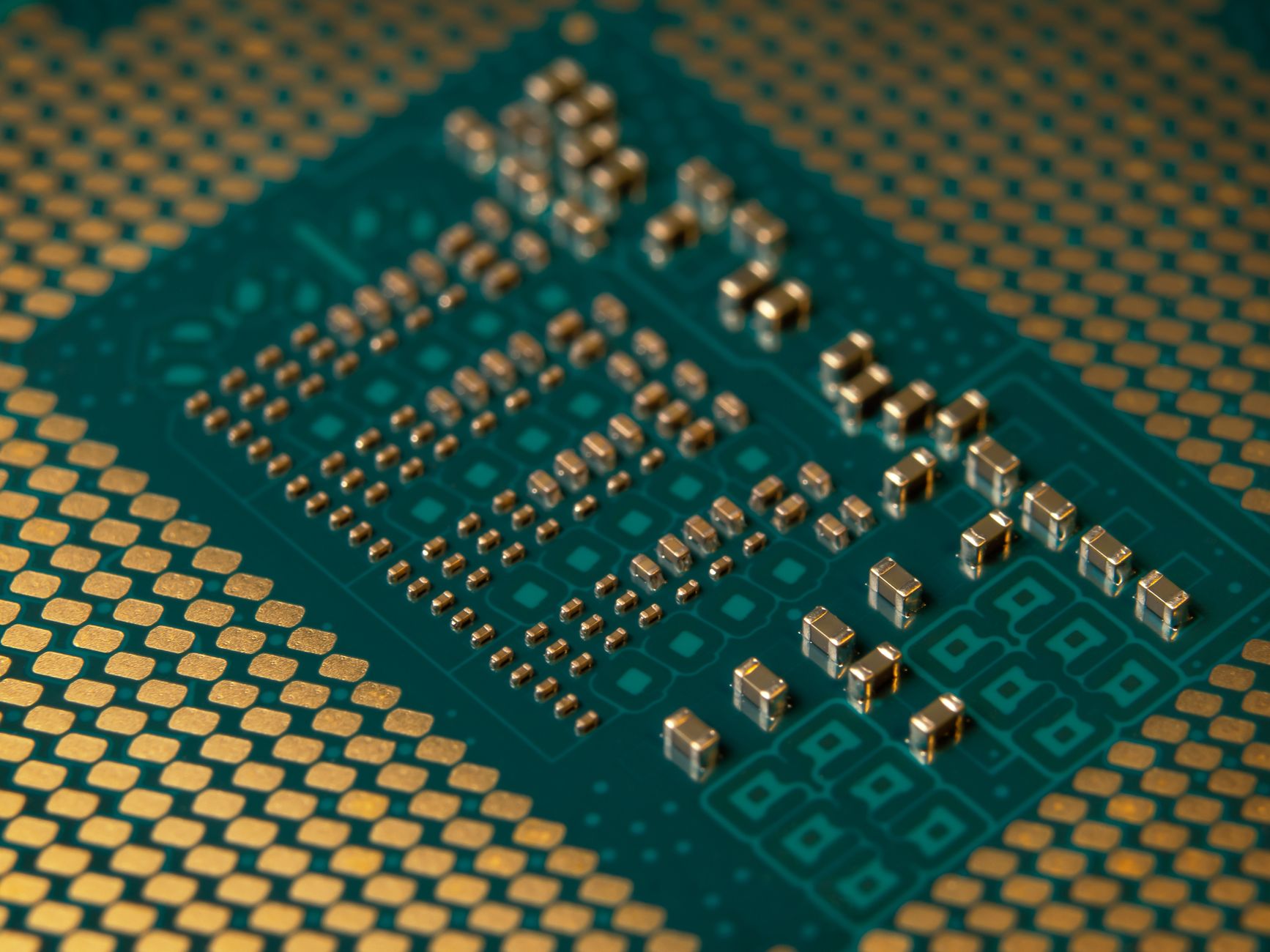
Excerpt: A $400 million investment in Source Foundry underscores strong confidence in AI hardware, custom chips, and next-generation compute. It also shows investors still see semiconductor infrastructure as one of tech’s highest-stakes opportunities. #aitrends #semiconductors #chipstartups #venturecapital #aichips #machinelearning
In an AI market often dominated by headlines about chatbots, model releases, and big cloud platforms, a large investment in a chip startup sends a different kind of signal. It suggests that serious money is still flowing into the infrastructure layer that makes modern artificial intelligence possible. Situational Awareness, an AI-focused hedge fund that has faced a challenging period, is reportedly investing $400 million in chip startup Source Foundry. Even without the spectacle of a consumer-facing AI product, that is the kind of move that gets the attention of investors, engineers, founders, and students watching where the technology industry is heading next.
The reason is simple: AI is no longer just a software story. It is a compute story, a power story, a supply-chain story, and increasingly a semiconductor story. Training and deploying advanced models requires enormous processing capacity, better memory handling, lower power consumption, and smarter hardware-software integration. As a result, startups working on chips, accelerators, packaging, and specialized architectures are attracting deeper interest than they have in years.
For anyone trying to understand the next phase of artificial intelligence, this kind of deal matters. A $400 million commitment is not just a financial event. It is a statement about where some investors believe value will be created over the next decade.
Why the Source Foundry deal is drawing attention
Large rounds for semiconductor startups are rare compared with typical software funding. Building a chip company is expensive, time-consuming, and operationally difficult. Designing silicon takes top technical talent, advanced tooling, access to manufacturing partners, long product cycles, and patient capital. That is why a $400 million investment stands out immediately.
It suggests that Source Foundry is operating in a part of the market where the payoff could be significant enough to justify the risk. In AI hardware, that usually means one of several things: solving bottlenecks around model training, making inference more efficient, improving performance per watt, reducing data-center costs, or enabling specialized use cases that general-purpose chips handle poorly.
The timing also matters. AI demand has put huge pressure on existing chip supply chains. Enterprises want faster inference. Cloud providers want better utilization. Startups want alternatives to expensive, high-demand GPU ecosystems. Edge computing vendors want lower-power AI capability closer to devices. In that environment, investors are looking beyond software applications and into the deeper layers of the stack.
- Scale matters: $400 million gives a startup room to hire elite chip designers, build prototypes, expand tooling, and survive long development timelines.
- Conviction matters: A hedge fund making a large private bet suggests confidence that semiconductor infrastructure will remain central to AI growth.
- Timing matters: The market is hungry for performance gains, supply resilience, and alternatives to existing compute constraints.
That combination makes this more than just another funding announcement. It is a reminder that the competition in AI is increasingly about who can build, access, and optimize the hardware underneath the models.
The bigger story: AI needs better chips, not just better models
For the past two years, public discussion around AI has centered on model capabilities. But behind every leap in model size, speed, or cost efficiency is an equally important question: what hardware makes that leap possible?
That question is becoming more urgent because the economics of AI are changing. Training frontier models remains extremely expensive, but inference at scale may become the even bigger business challenge. As companies move from demos to real products, they need chips that can process billions of requests reliably and affordably. That is where startup innovation becomes attractive.
Efficiency is becoming a competitive advantage
Raw performance is no longer enough. AI companies now care about performance per watt, latency, thermal limits, memory bandwidth, and deployment flexibility. A chip that is slightly less powerful than the market leader can still be highly valuable if it is cheaper, more efficient, easier to deploy, or better suited for a specific workload.
This shift is opening room for startups. Instead of trying to outmuscle the largest incumbents on every metric, newer companies can focus on narrower but important technical problems. These might include accelerating inference for enterprise AI, improving edge processing for robotics, handling sparse models more efficiently, or reducing data movement costs inside AI systems.
That is why semiconductor innovation is increasingly tied to practical AI deployment. The next wave of value may come less from flashy demos and more from the hidden engineering improvements that make AI usable at scale.
Custom silicon is moving from niche to mainstream
Only a few years ago, custom AI chips were often discussed as a specialized or speculative area. Today, they are becoming a mainstream strategic priority. Big technology companies are building in-house silicon. Cloud providers are expanding custom accelerators. Device manufacturers are optimizing on-device AI. Startups are trying to serve the gaps that general-purpose platforms leave behind.
That broader shift explains why deals like this resonate across the industry. They show that investors are not only betting on AI applications; they are betting on the physical systems that determine how fast, affordable, and sustainable those applications can become.
What Source Foundry represents in the current chip startup wave
Even when specific product details remain limited, a funding event of this size tells us a lot about the market logic surrounding a company like Source Foundry. Investors backing semiconductor startups at this level are typically looking for differentiated architecture, a meaningful technical moat, and a large enough market to justify long development cycles.
In practical terms, the opportunity for AI chip startups usually falls into a few major categories:
- Improving AI training throughput for data-intensive workloads
- Reducing the cost of inference in enterprise and cloud environments
- Designing edge AI processors for devices, sensors, vehicles, or robotics
- Optimizing memory and interconnect performance, where major bottlenecks often appear
- Building hardware that pairs tightly with software frameworks for specific AI tasks
The size of the investment suggests that investors see a path to relevance in one or more of these areas. It also suggests that Source Foundry is being viewed not as a small experimental startup, but as a company that could play a meaningful role in the future AI compute ecosystem.
That matters because the semiconductor market often rewards focus. The most promising startups do not always try to replace every existing chip category. Sometimes they win by being exceptionally good at one constrained problem that large players have not solved efficiently enough.
For example, a startup can become valuable by serving one high-growth use case: inference at the edge, privacy-preserving on-device AI, lower-energy deployment for enterprise workloads, or specialized accelerators for emerging industrial applications. In each case, the business case is strengthened by the fact that AI demand is expanding faster than many existing hardware pipelines can comfortably support.
Why an AI-focused hedge fund is making private chip bets
There is also an interesting financial angle here. Hedge funds are often associated with public markets, trading strategies, and shorter time horizons than classic venture capital. But AI is blurring those boundaries. Some investment firms want exposure not only to public winners, but also to private infrastructure companies before they become central market players.
For an AI-focused hedge fund, a chip startup may offer exactly the kind of asymmetry that software markets currently struggle to provide. Consumer AI applications can become crowded quickly. Model layers can be commoditized. But infrastructure, especially semiconductor infrastructure, can create durable barriers to entry if the technology works and customers adopt it.
That does not make the bet safe. Chip investments are famously risky. Still, they can be attractive because the upside is tied to foundational demand. If AI usage continues to expand across enterprise tools, scientific computing, cloud platforms, industrial automation, and intelligent devices, then demand for better compute will remain strong even as specific software trends change.
This is one reason private capital continues to chase semiconductor opportunities despite volatility elsewhere. Investors may disagree on which AI apps will dominate, but many agree that efficient compute will remain indispensable.
What this means for students, engineers, and career starters
Deals like this are also useful signals for people building careers in technology. They highlight a reality that is easy to miss in software-heavy conversations: the future of AI depends on multidisciplinary talent. The companies shaping the next era of compute need chip designers, firmware engineers, compiler specialists, distributed systems experts, cloud infrastructure professionals, data engineers, product leaders, and researchers who can work across hardware and software boundaries.
For students and early-career professionals, that means AI opportunities are broader than prompt engineering or model fine-tuning. The most durable career paths may come from understanding the systems that power AI end to end.
Some of the most valuable skill areas now include:
- Computer architecture: understanding how processors, memory systems, and accelerators actually behave under load
- Embedded and low-level programming: especially C, C++, Rust, firmware concepts, and hardware-aware optimization
- Machine learning systems: deployment, inference pipelines, and performance tuning
- Cloud and distributed infrastructure: scaling AI services efficiently across production environments
- Data engineering: moving, preparing, and serving the data that AI systems depend on
That is why learners interested in this space often benefit from building experience across adjacent domains. If you are exploring practical pathways into AI infrastructure, programs in AI & Machine Learning internships can help develop model-side understanding, while Cloud Computing & DevOps internships are useful for understanding the production environments where AI workloads actually run.
Students who are still deciding where to specialize may also benefit from browsing internship opportunities across technical domains, because the future AI workforce will likely need more hybrid professionals who can speak both the language of models and the language of systems.
The risks behind the optimism
Of course, a $400 million investment does not guarantee success. Semiconductor startups face a difficult set of hurdles even in strong markets. Designing great technology is only the beginning.
One challenge is manufacturing access. Advanced chips depend on highly specialized foundries, packaging capabilities, and supply-chain coordination. Another challenge is ecosystem adoption. Even a technically impressive chip can struggle if developers find it difficult to integrate, optimize, or deploy. In AI, software compatibility often matters almost as much as raw silicon performance.
Then there is competition. Startups are not operating in a vacuum. They face pressure from major incumbents, hyperscalers building internal chips, and a global race to secure talent and production capacity. Industry groups such as the Semiconductor Industry Association have repeatedly stressed how strategically important chip capacity, research investment, and supply resilience have become.
Policy also matters. Governments increasingly view semiconductors as national infrastructure, not just commercial technology. That is part of why initiatives such as the official CHIPS for America program have attracted so much attention. Public support, manufacturing strategy, and export policy can all influence how startup hardware companies scale.
In short, the upside is big, but so are the execution risks. That is exactly why large investments in this category carry so much weight: they reflect a willingness to fund not just innovation, but endurance.
Where the AI chip market may go next
The broader takeaway from the Source Foundry investment is that AI is entering a more infrastructure-conscious phase. Markets are beginning to separate superficial AI excitement from the deeper systems work that will shape long-term winners. That systems work includes chips, networking, cooling, packaging, energy efficiency, deployment tooling, and the software layers that connect them.
For founders, the message is encouraging but demanding. Capital is available for ambitious hardware ideas, but only when investors believe the technical differentiation is real and the market opportunity is large enough. For enterprises, the message is that alternatives in AI compute may continue to grow, which could improve pricing, specialization, and deployment flexibility over time.
For students, developers, and engineers, the message is even more practical. If you want to work close to the future of AI, do not look only at the model interface. Look underneath it. The most important breakthroughs may happen in the layers users never directly see: the silicon, the systems, and the infrastructure that make modern AI viable at scale.
Situational Awareness may be making a bold bet during a difficult period, but that is often when the market reveals what it truly values. Right now, one thing is clear: the race to shape artificial intelligence is also a race to build the hardware foundation beneath it. And that race is only becoming more important.
#aitrends #semiconductors #chipstartups #venturecapital #aichips #machinelearning